
Sheet pan dinners usually play it safe — chicken and potatoes, sausage and peppers. This one takes a detour: salmon fillets brushed with a sweet-savory miso glaze and baby bok choy, roasted together on one pan at high heat until the glaze caramelizes at the edges and the salmon flakes apart. Serve it over rice and dinner tastes like a Japanese restaurant made it — in 30 minutes, with one pan to wash.
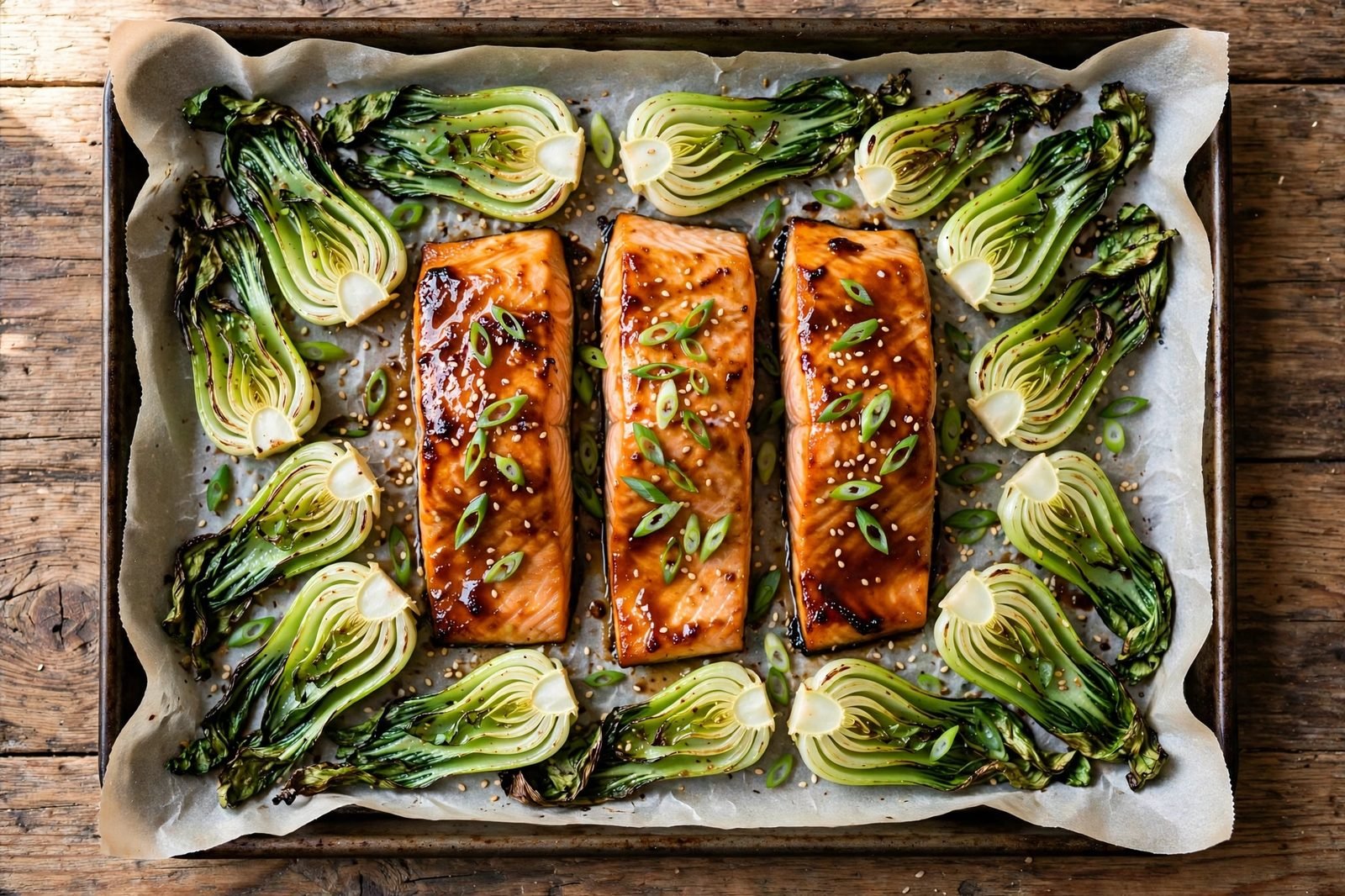
Why you’ll love it
- One pan, restaurant flavor. White miso, mirin, and soy do all the heavy lifting — no marinating required.
- ~36g protein per serving (estimated), from generous salmon fillets plus rice and miso.
- Genuinely 30 minutes. The bok choy roasts while you glaze the salmon; the rice cooks while the pan’s in the oven.
- Naturally dairy-free as written — nothing to substitute.
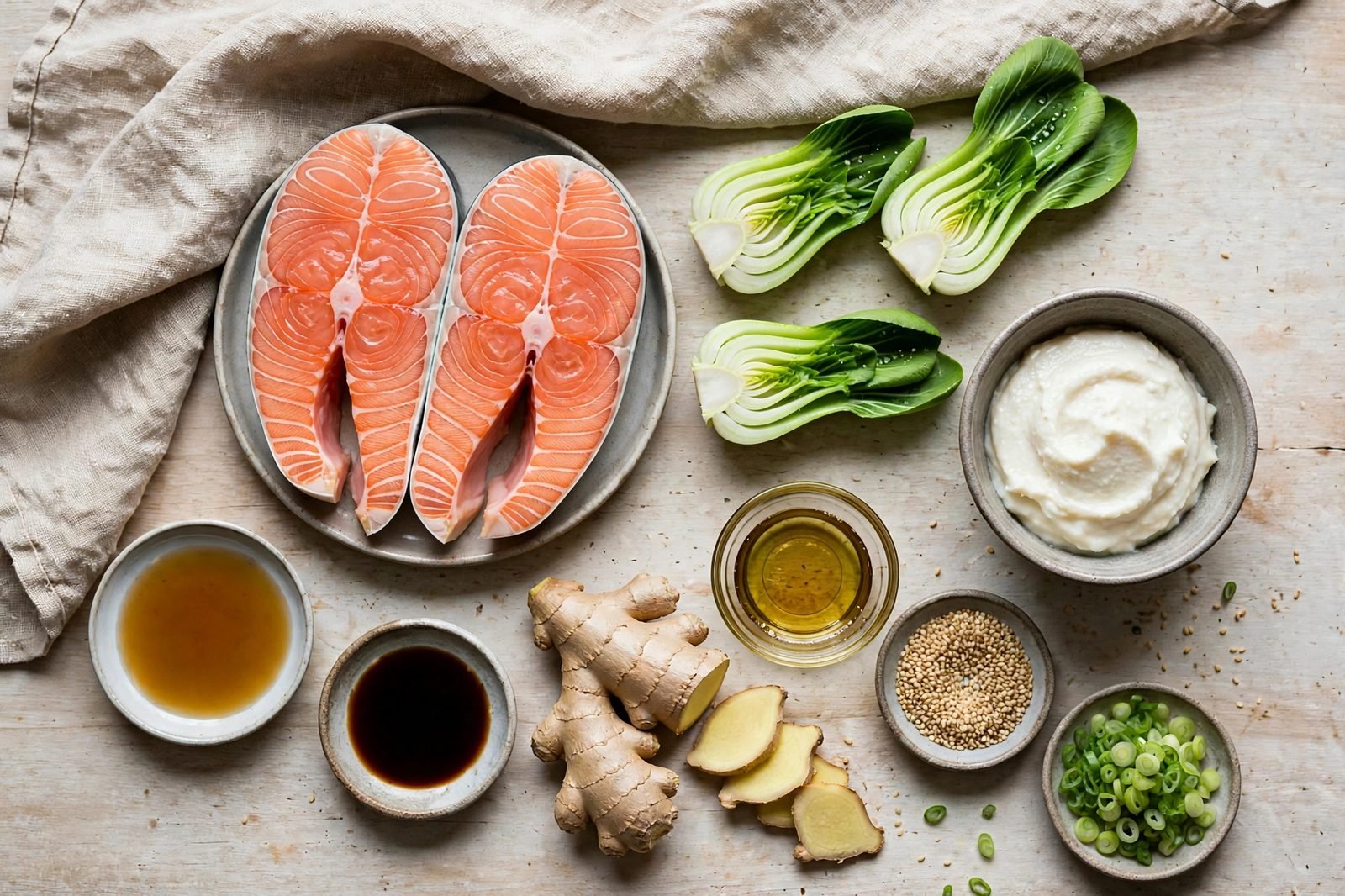
Ingredients
- 4 salmon fillets (5–6 oz each), skin-on, patted dry
- 1 lb baby bok choy, about 8 heads, trimmed and halved lengthwise
- 3 tablespoons white miso paste
- 2 tablespoons mirin, or 1 1/2 tablespoons honey
- 1 tablespoon low-sodium soy sauce
- 1 teaspoon grated fresh ginger
- 1 teaspoon toasted sesame oil
- 1 clove garlic, minced
- 2 tablespoons neutral oil (avocado or vegetable), divided
- 1/2 teaspoon kosher salt, divided
- 3 cups cooked white or brown rice, for serving
- 1 tablespoon toasted sesame seeds
- 2 green onions, thinly sliced
Equipment
A large rimmed sheet pan (18×13-inch), parchment paper or foil, a small bowl and whisk, and an instant-read thermometer.
Instructions
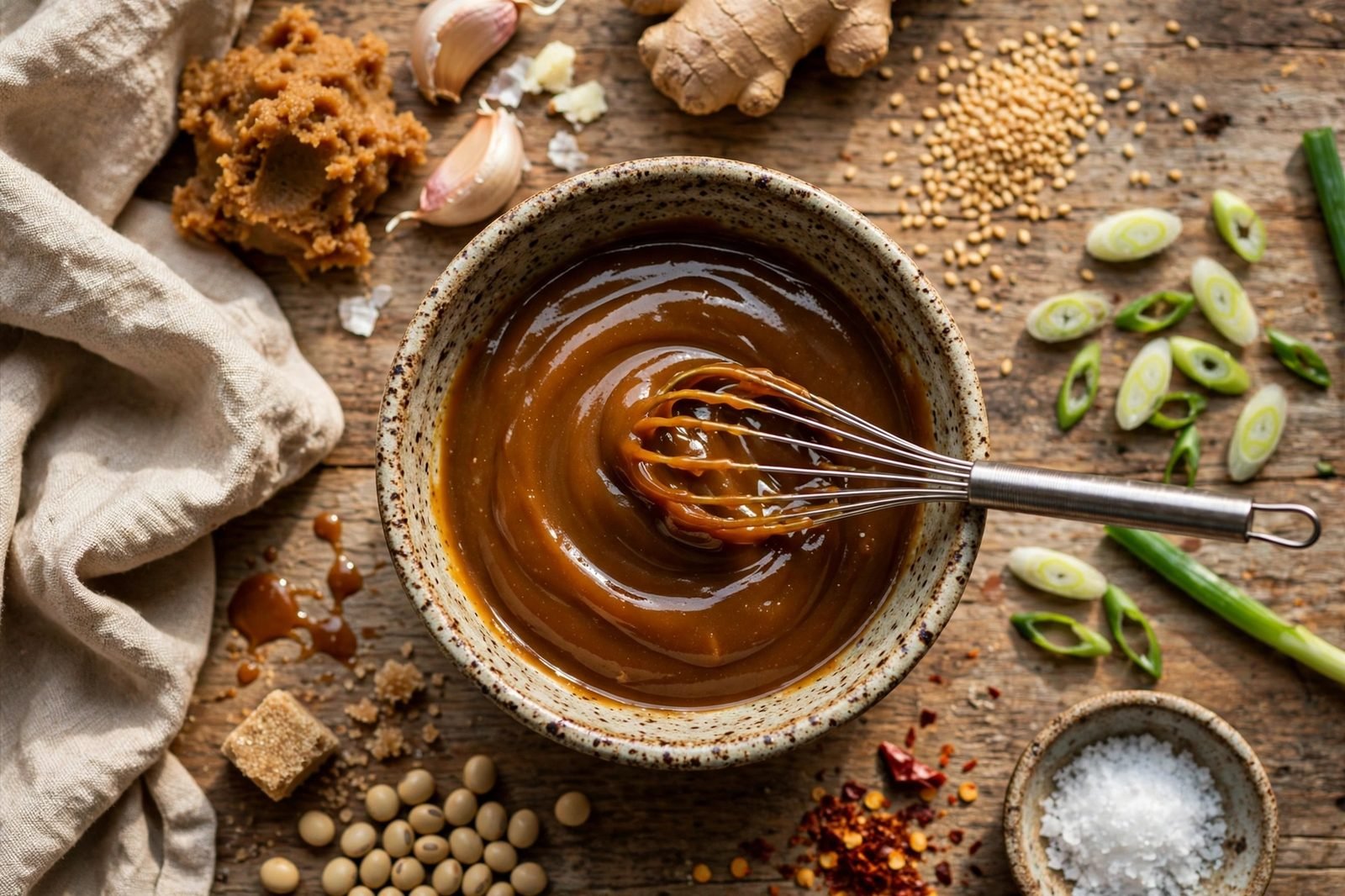
- Heat the oven and mix the glaze (5 minutes). Position a rack in the center of the oven and preheat to 425°F. Line a rimmed sheet pan with parchment or foil. In a small bowl, whisk the miso, mirin (or honey), soy sauce, ginger, sesame oil, and garlic until smooth.
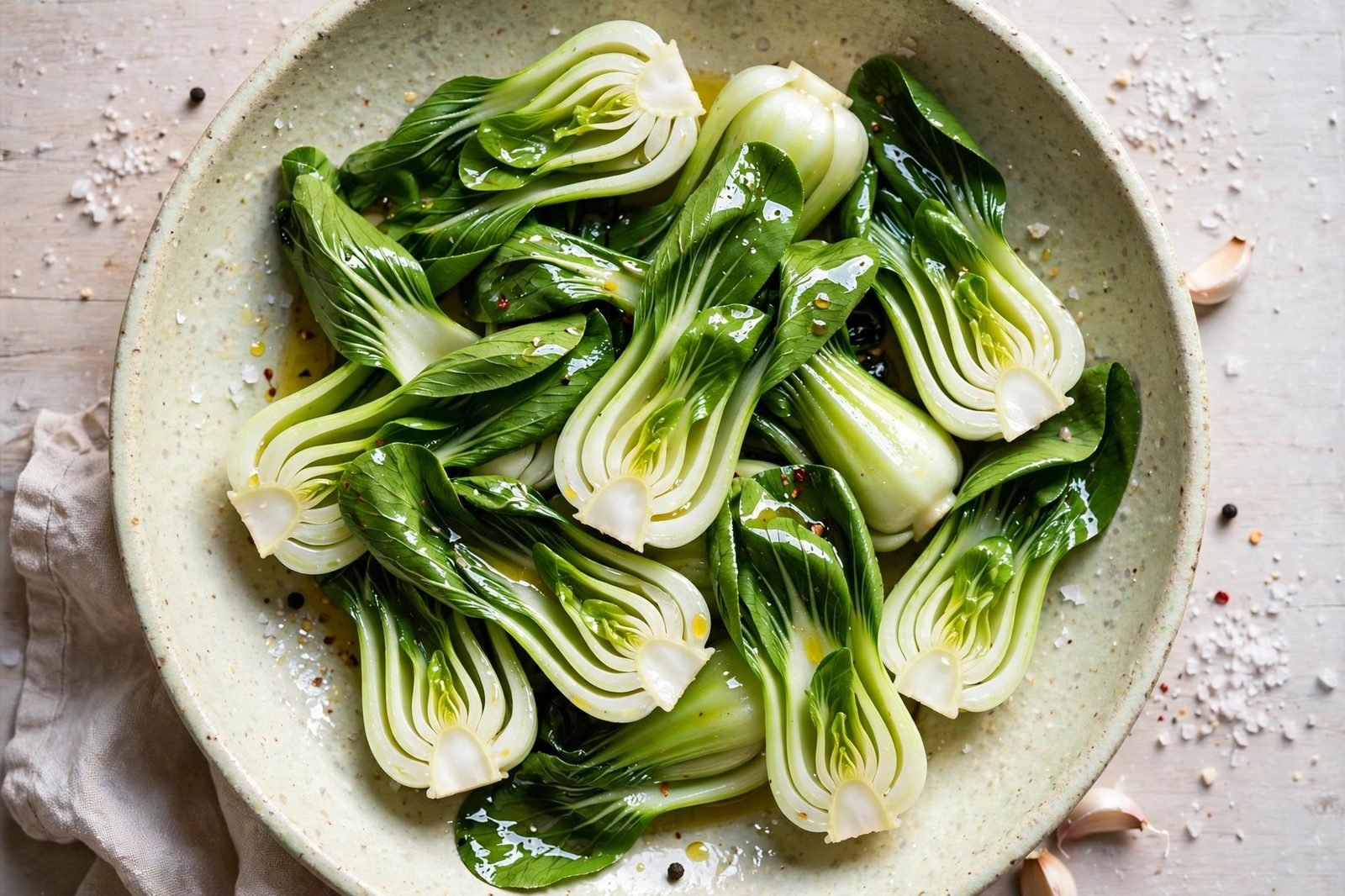
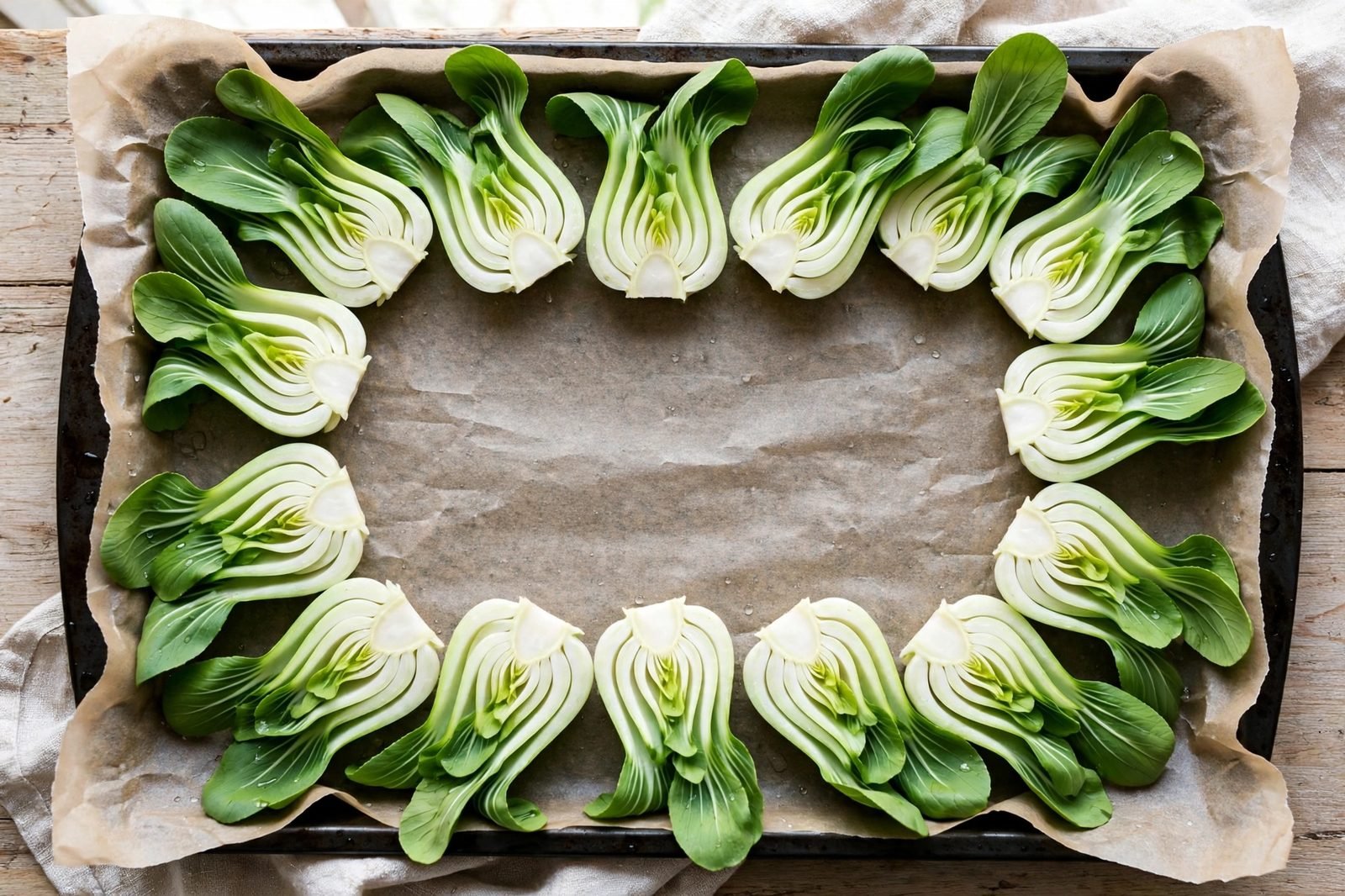
- Prep the bok choy (5 minutes). Toss the bok choy halves with 1 tablespoon of the neutral oil and 1/4 teaspoon of the salt. Arrange them cut-side up around the edges of the sheet pan, leaving the center open.
- Give the bok choy a head start (8 minutes). Roast the bok choy for 8 minutes, until the leaves wilt and the stems start to soften.
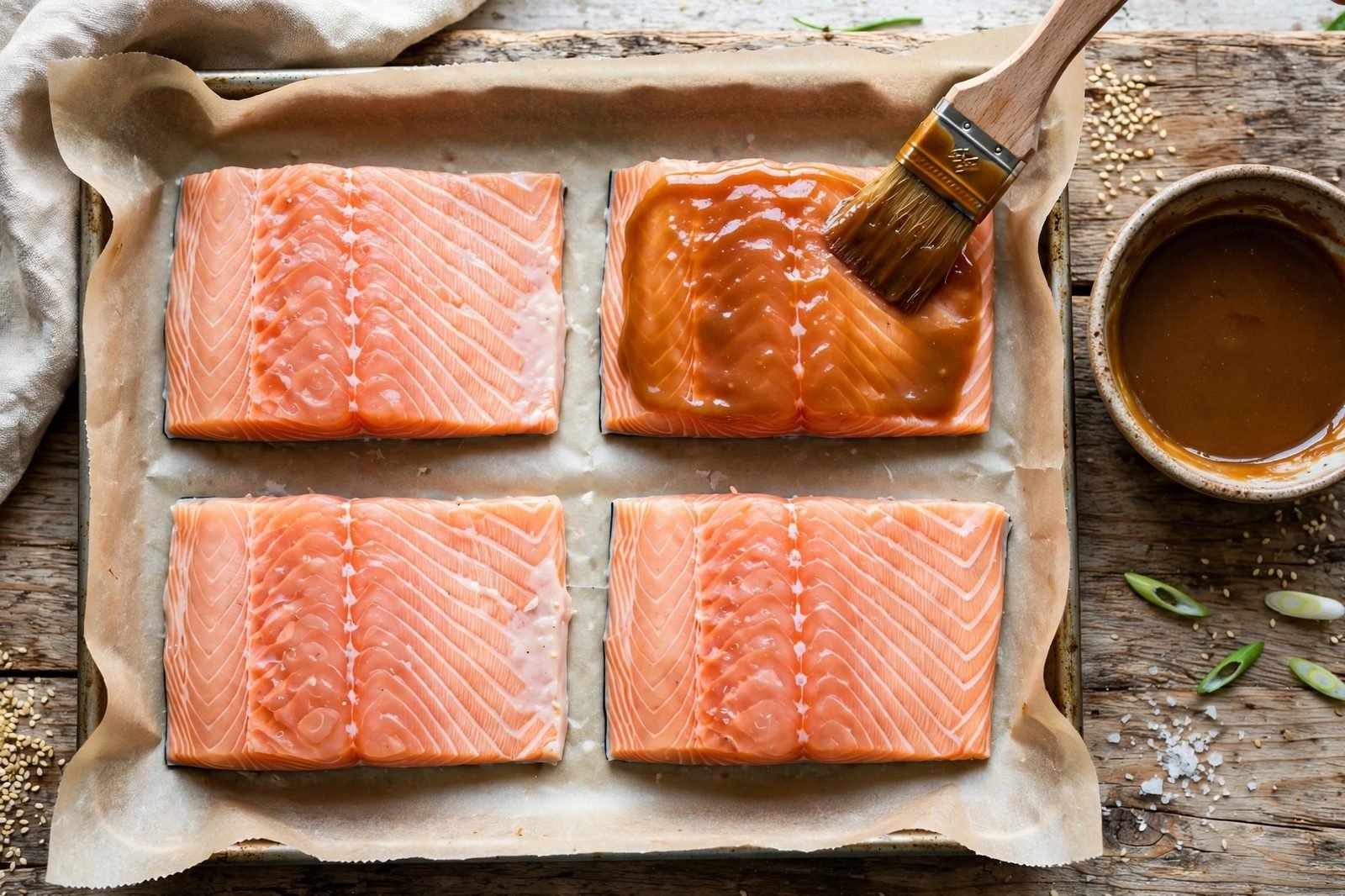
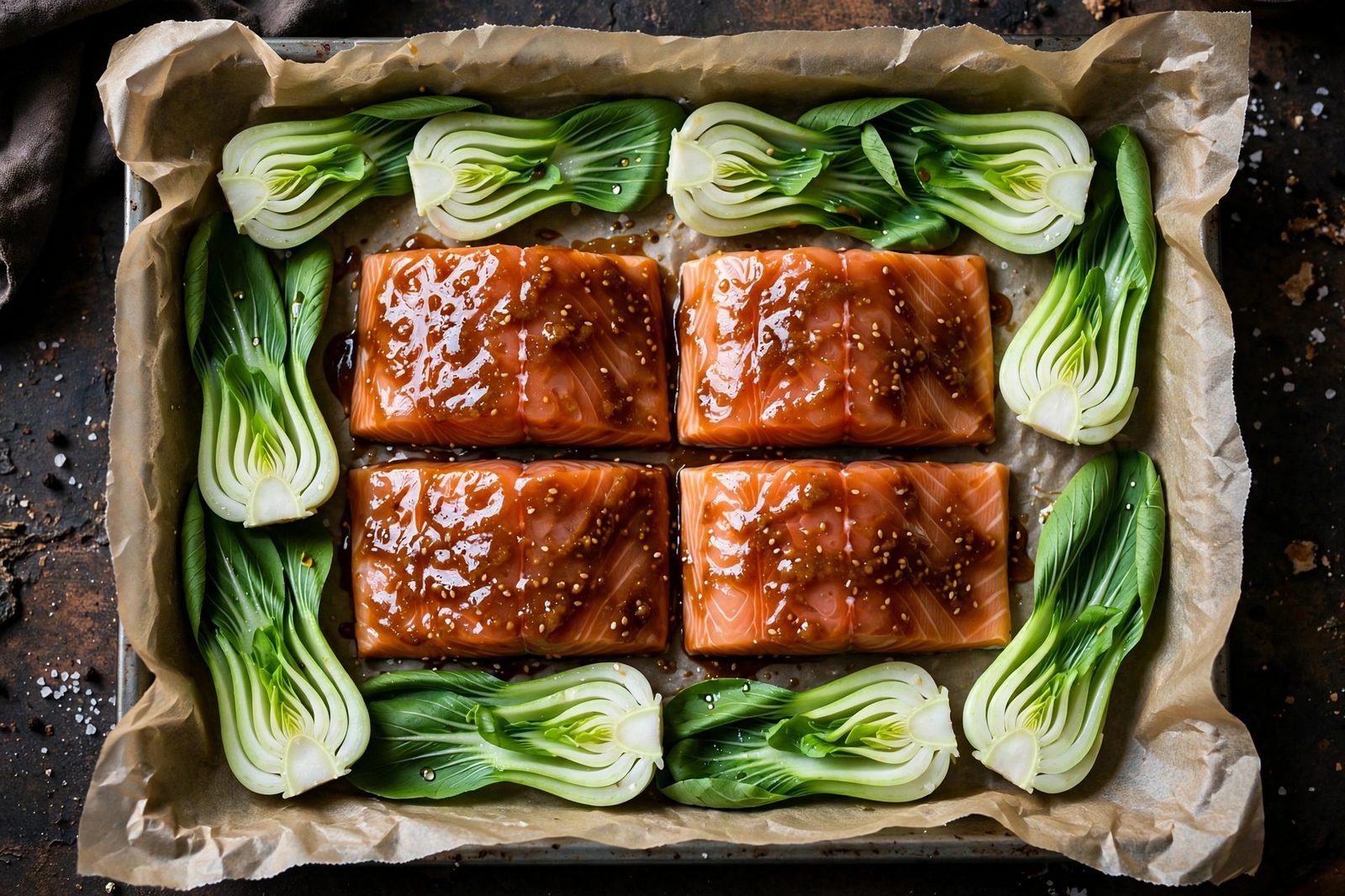
- Add the glazed salmon (12 minutes). Pat the salmon fillets very dry and season with the remaining 1/4 teaspoon salt. Place them skin-side down in the center of the pan and brush thickly with the miso glaze. Drizzle the remaining 1 tablespoon oil over the bok choy. Roast 10–12 minutes, until the salmon is opaque, flakes easily, and reaches 145°F at the thickest part.
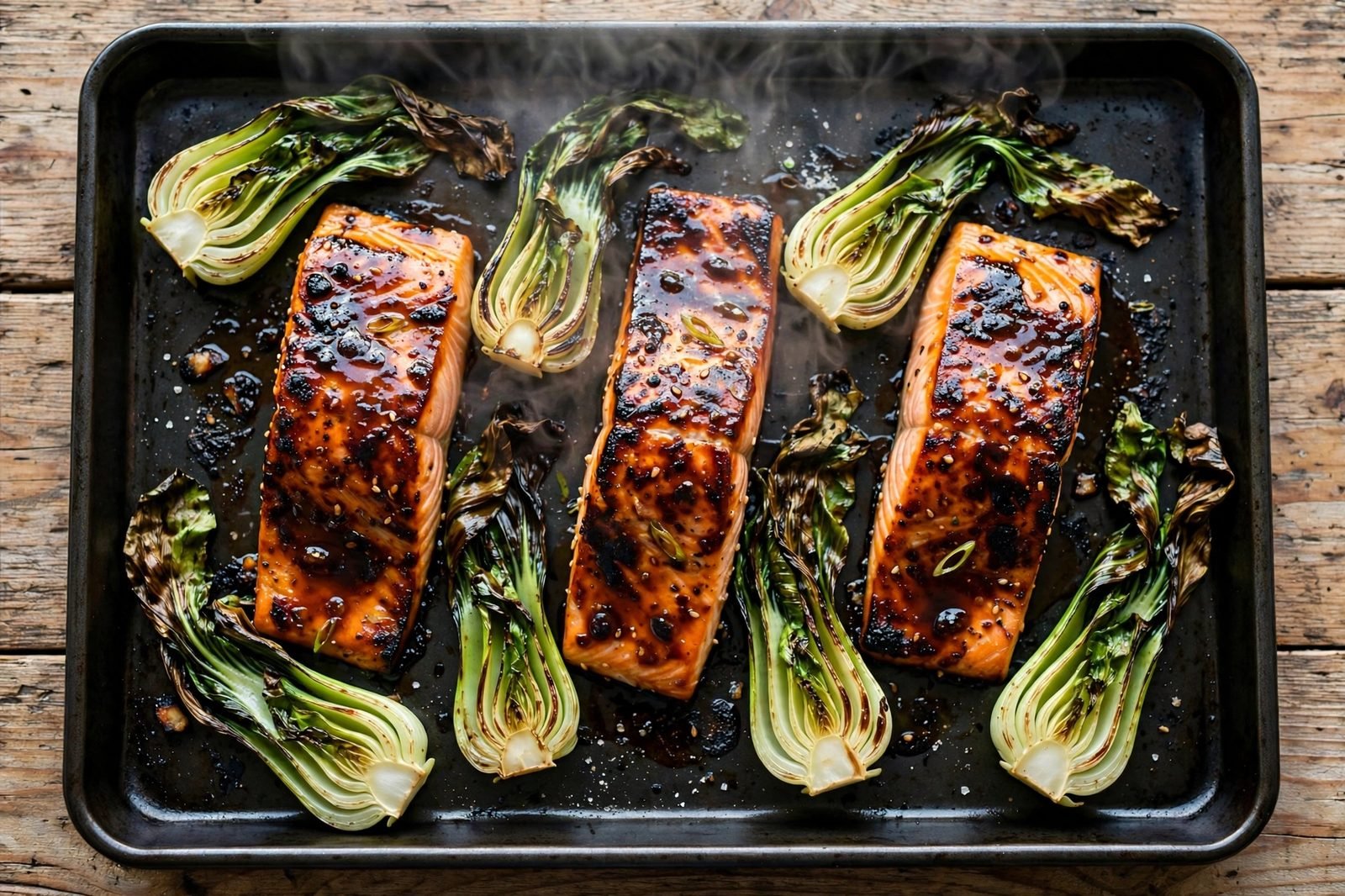
- Caramelize the glaze (2 minutes, optional). Switch the oven to broil and broil 1–2 minutes, until the glaze is bubbly and lightly charred at the edges. Watch closely — miso burns fast.
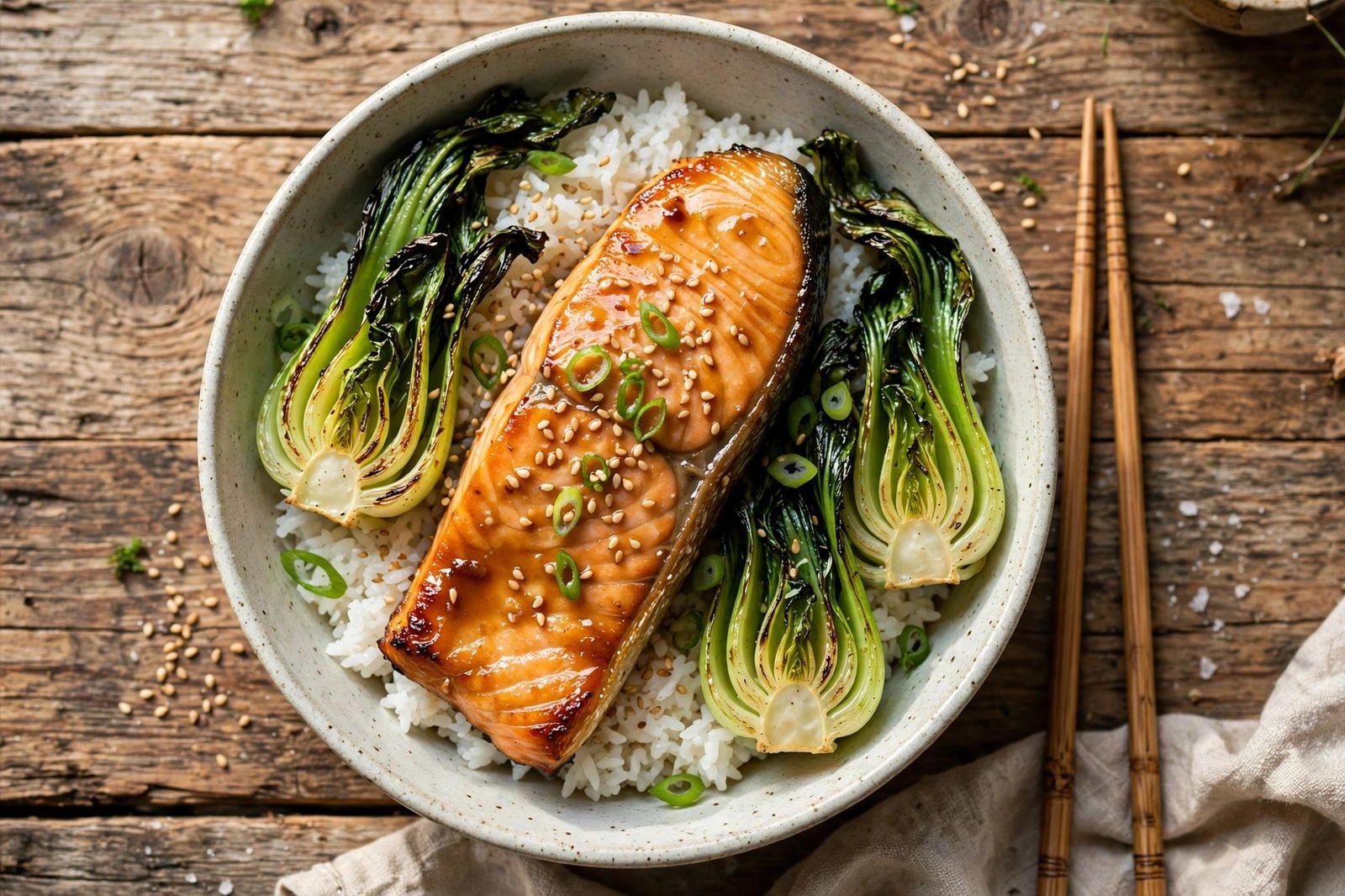
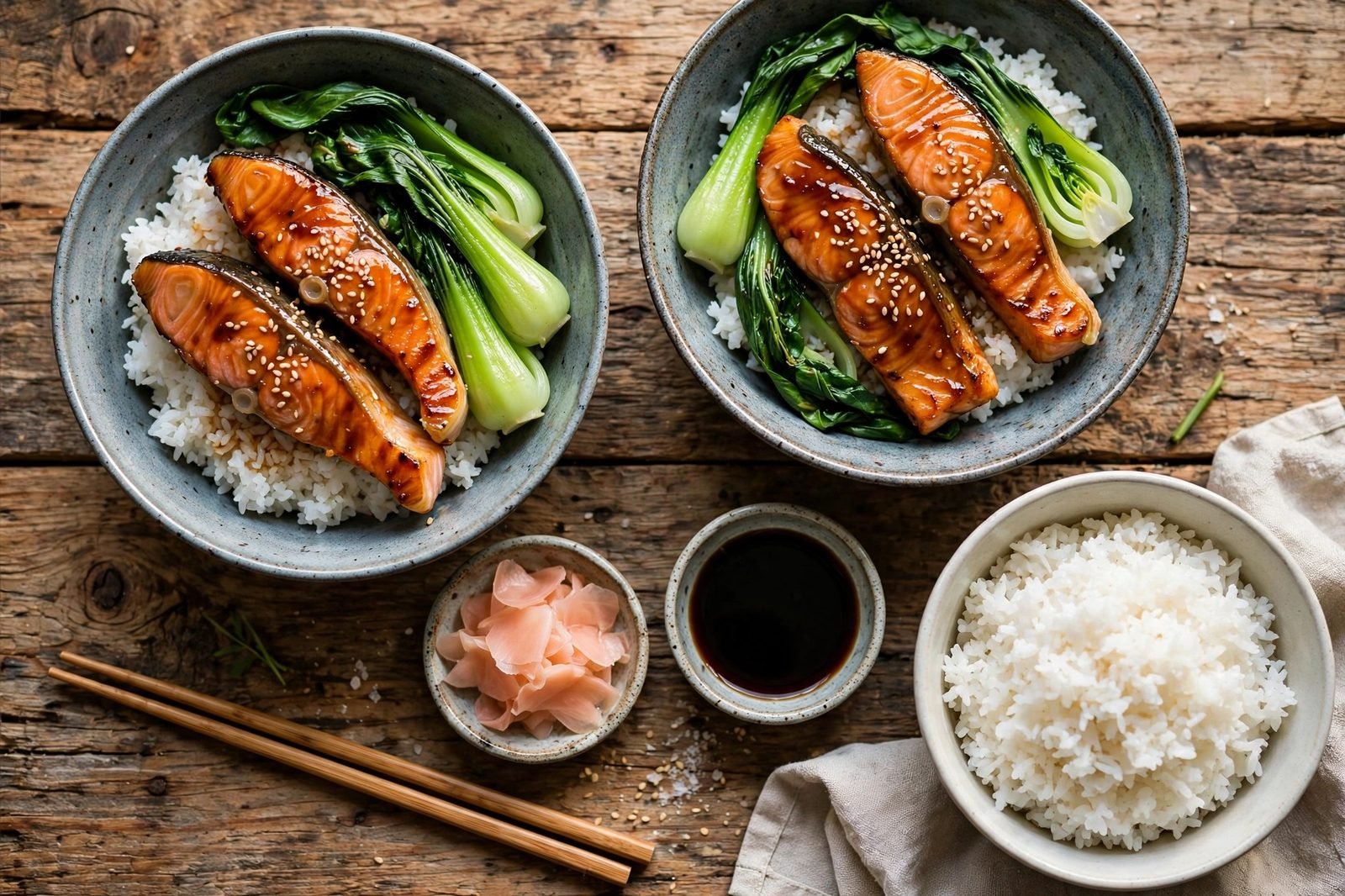
- Serve over rice. Spoon rice into bowls, top with a salmon fillet and a generous pile of bok choy. Drizzle with the savory pan juices, then sprinkle with sesame seeds and green onions.
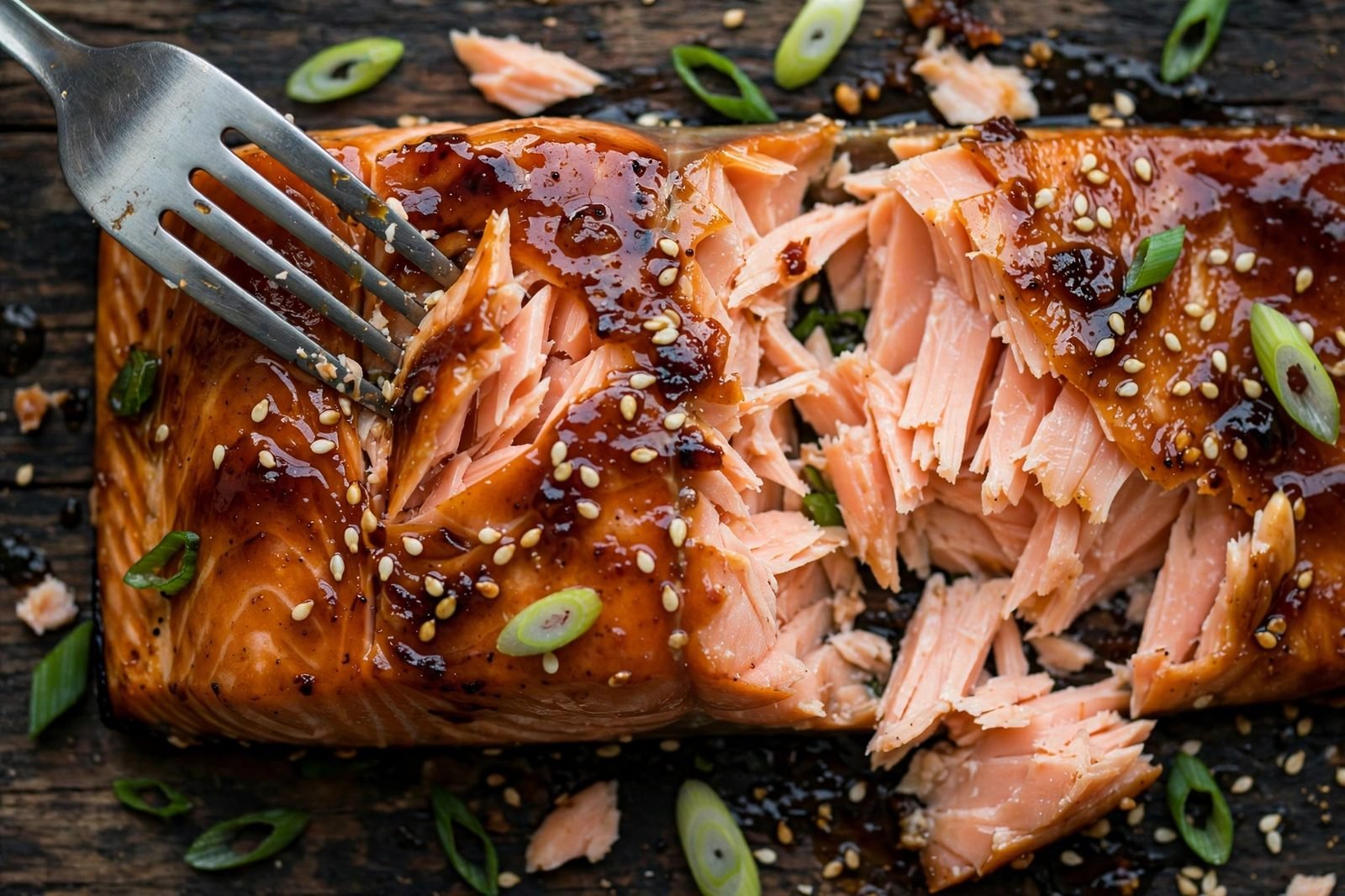
Doneness cues: Salmon is done at 145°F internally at the thickest part — an instant-read thermometer is the only reliable check. The flesh should be opaque and flake easily with a fork, with just a hint of translucence gone. Bok choy is ready when the stems are tender-crisp and the leaves are wilted with charred edges.
30-Minute Sheet Pan Miso Salmon & Bok Choy
Ingredients
Equipment
Method
- Position a rack in the center of the oven and preheat to 425°F. Line a rimmed sheet pan with parchment or foil. In a small bowl, whisk the miso, mirin (or honey), soy sauce, ginger, sesame oil, and garlic until smooth.
- Toss the bok choy halves with 1 tablespoon of the neutral oil and 1/4 teaspoon of the salt. Arrange them cut-side up around the edges of the sheet pan, leaving the center open.
- Roast the bok choy for 8 minutes, until the leaves wilt and the stems start to soften.
- Pat the salmon fillets very dry and season with the remaining 1/4 teaspoon salt. Place them skin-side down in the center of the pan and brush thickly with the miso glaze. Drizzle the remaining 1 tablespoon oil over the bok choy. Roast 10–12 minutes, until the salmon is opaque, flakes easily, and reaches 145°F at the thickest part.
- Switch the oven to broil and broil 1–2 minutes, until the glaze is bubbly and lightly charred at the edges. Watch closely — miso burns fast.
- Spoon rice into bowls, top with a salmon fillet and a generous pile of bok choy. Drizzle with the savory pan juices, then sprinkle with sesame seeds and green onions.
Notes
Nutrition note
Protein is estimated at about 36g per serving, calculated from USDA FoodData Central values for the listed ingredients — this is an estimate, not a lab analysis. Actual values vary by brand and preparation. This recipe is naturally dairy-free as written.
Substitutions and tips
- No mirin? Use 1 1/2 tablespoons honey (or maple syrup) — it caramelizes just as beautifully under the broiler.
- Different greens: halved baby broccoli or snap peas swap in for bok choy; add them at step 4 since they cook faster.
- Thaw frozen salmon first — glaze slides off icy fillets and the glaze burns before the fish cooks through. Pat very dry for the best caramelization.
- Don’t skip the bok choy head start in step 3 — salmon and bok choy don’t finish at the same time, and 8 minutes of pre-roasting brings them into sync.
- Line the pan. Miso glaze chars onto bare metal and you’ll regret it. Parchment or foil makes cleanup a non-event.
Storage and reheating
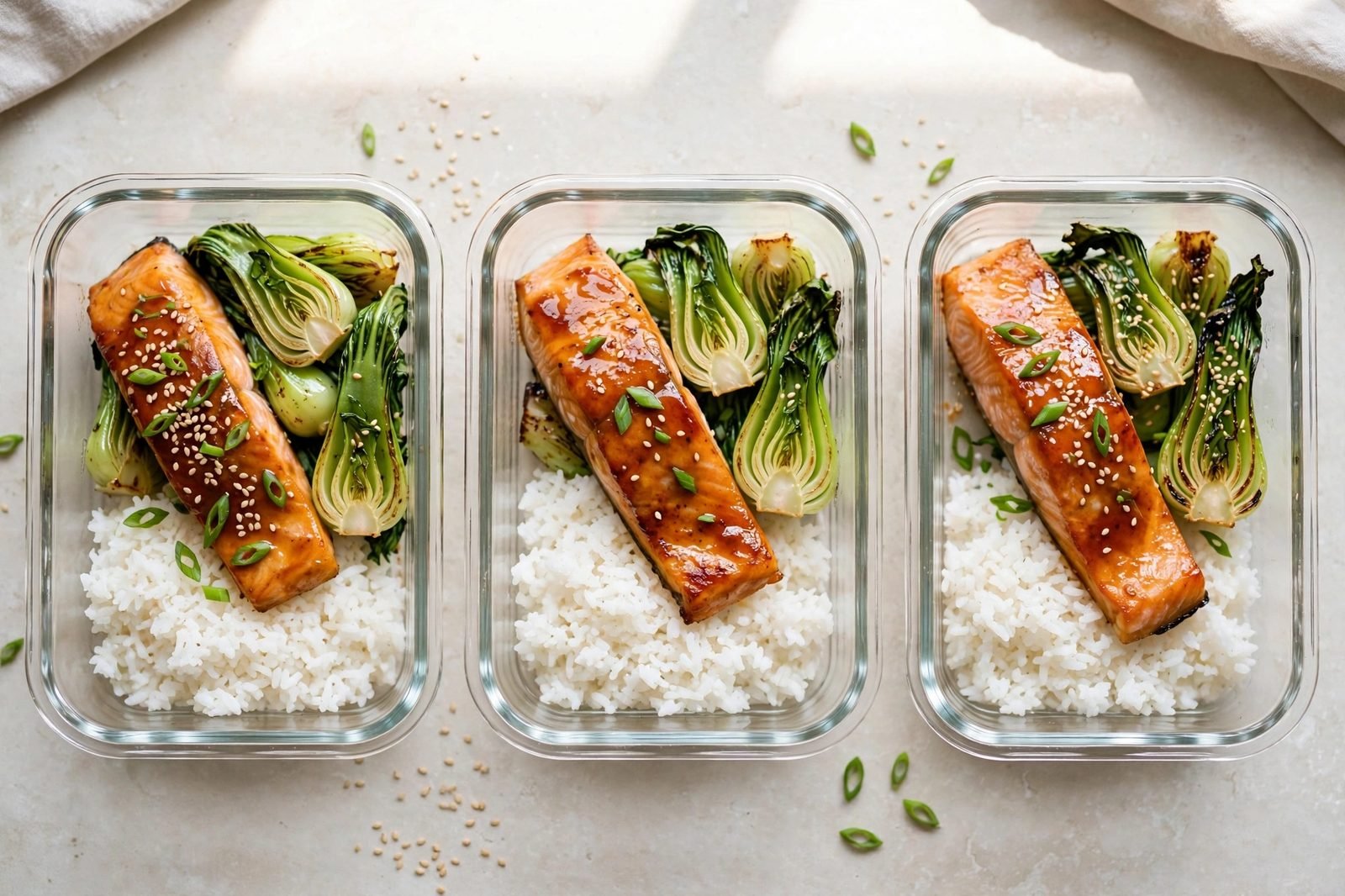
Refrigerate leftovers within 2 hours in an airtight container for up to 3 days (keep rice separate from salmon and bok choy if you can). Reheat gently in a 300°F oven, covered with foil, for 10–12 minutes, until the salmon reaches 145°F again — the microwave works in a pinch but the glaze gets sticky. Freezing is not recommended; salmon and bok choy both turn mushy on thawing.
Frequently asked questions
Can I use frozen salmon? Yes, but thaw it fully in the fridge first (overnight is best) and pat it very dry. Glazing a frozen fillet means the glaze slides off and burns before the fish cooks.
What can I substitute for mirin? Honey is the closest swap at 1 1/2 tablespoons. Dry white wine plus a teaspoon of sugar also works. Avoid “aji-mirin” style sweet cooking wine if it’s mostly corn syrup — honey tastes better here.
Is this recipe dairy-free? Yes, as written — there’s no butter or dairy anywhere. Just double-check your miso and soy sauce labels if you have a soy or wheat allergy; tamari is a good gluten-free soy swap.
Can I add other vegetables? Snap peas, halved baby broccoli, or sliced shiitake mushrooms all work — add them at step 4 with the salmon since they cook faster than bok choy.
How do I know the salmon is done without a thermometer? Press the thickest part with a fork — it should flake into clean layers and look opaque throughout. But a thermometer to 145°F is the reliable way; it’s worth the investment.
More easy salmon dinners
For another 30-minute salmon night, try our 30-Minute Coconut Curry Salmon. Love one-pan cooking? Our 30-Minute Sheet Pan Balsamic Glazed Chicken & Veggies keeps it hands-off too. More Japanese-inspired flavor: 25-Minute Blackened Salmon & Mango Salsa.