
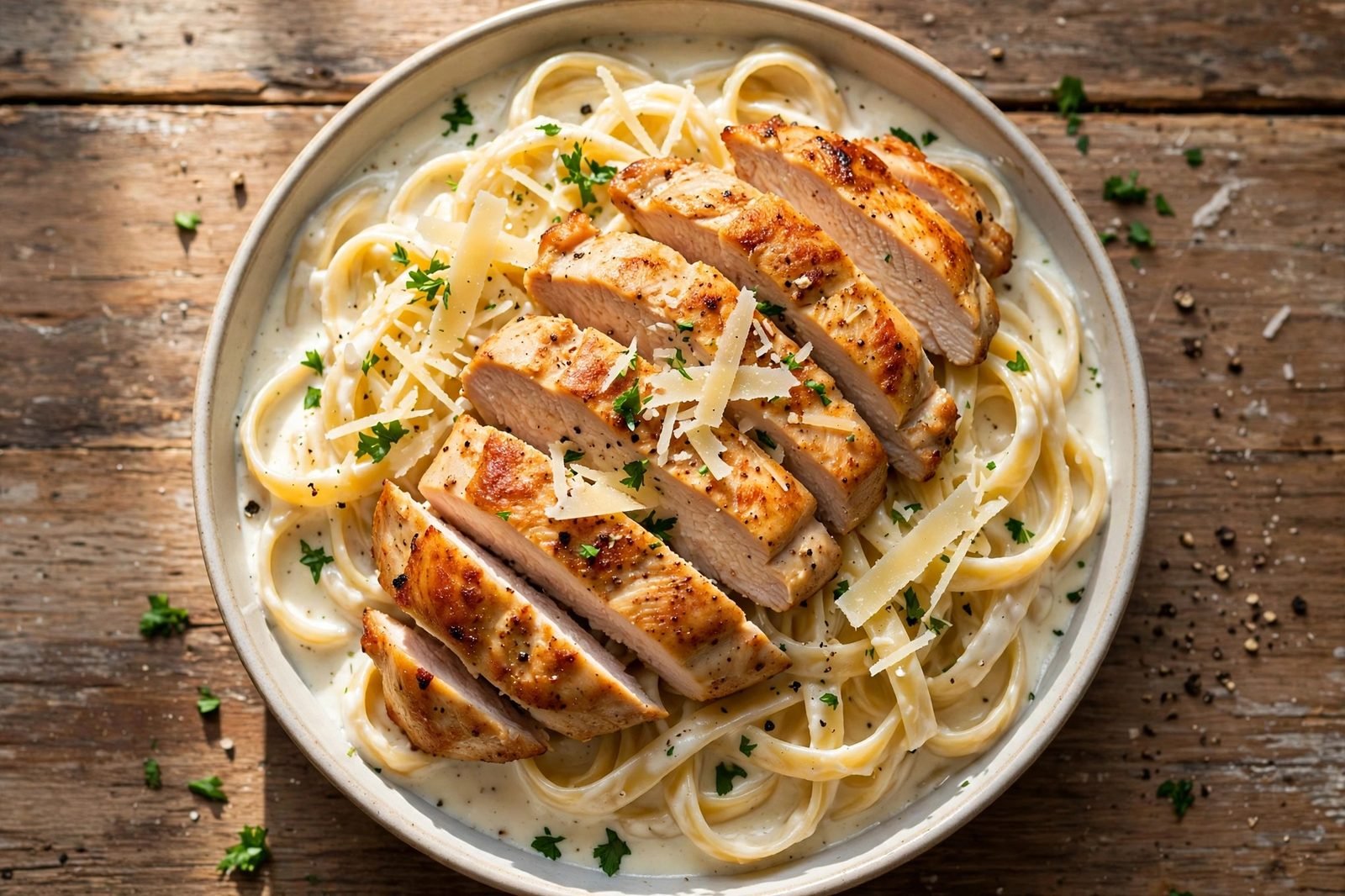
Let’s address the elephant in the room: cottage cheese in alfredo sounds wrong. But here’s the thing nobody tells the skeptics — once cottage cheese is blended completely smooth with Parmesan and garlic, it stops tasting like cottage cheese entirely. It becomes a creamy, cheesy, genuinely alfredo-tasting sauce with a fraction of the heaviness and a wallop of protein. This is the viral sauce for a reason: fettuccine, seared chicken, and a silky sauce, all in 20 minutes.
Why you’ll love it
- The sauce actually works. Blended 60–90 seconds, cottage cheese turns completely silky — no curds, no weirdness, just creamy.
- ~50g protein per serving (estimated), from chicken, cottage cheese, Parmesan, and pasta combined.
- No heavy cream. The sauce gets its body from blended cottage cheese and starchy pasta water.
- Faster than delivery. The pasta boils while the chicken sears; the sauce blends in the background.
Ingredients
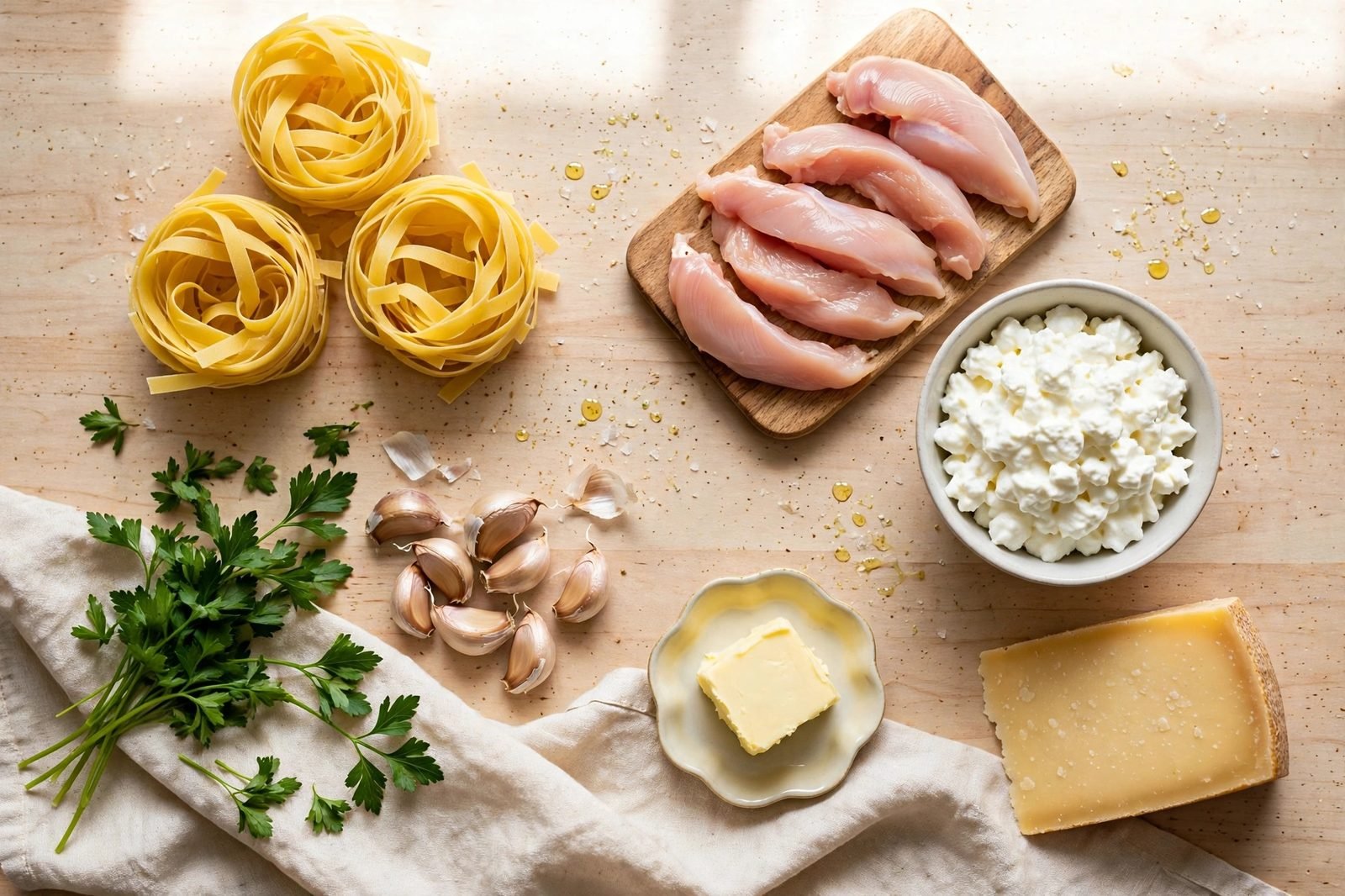
- 12 oz fettuccine, or penne
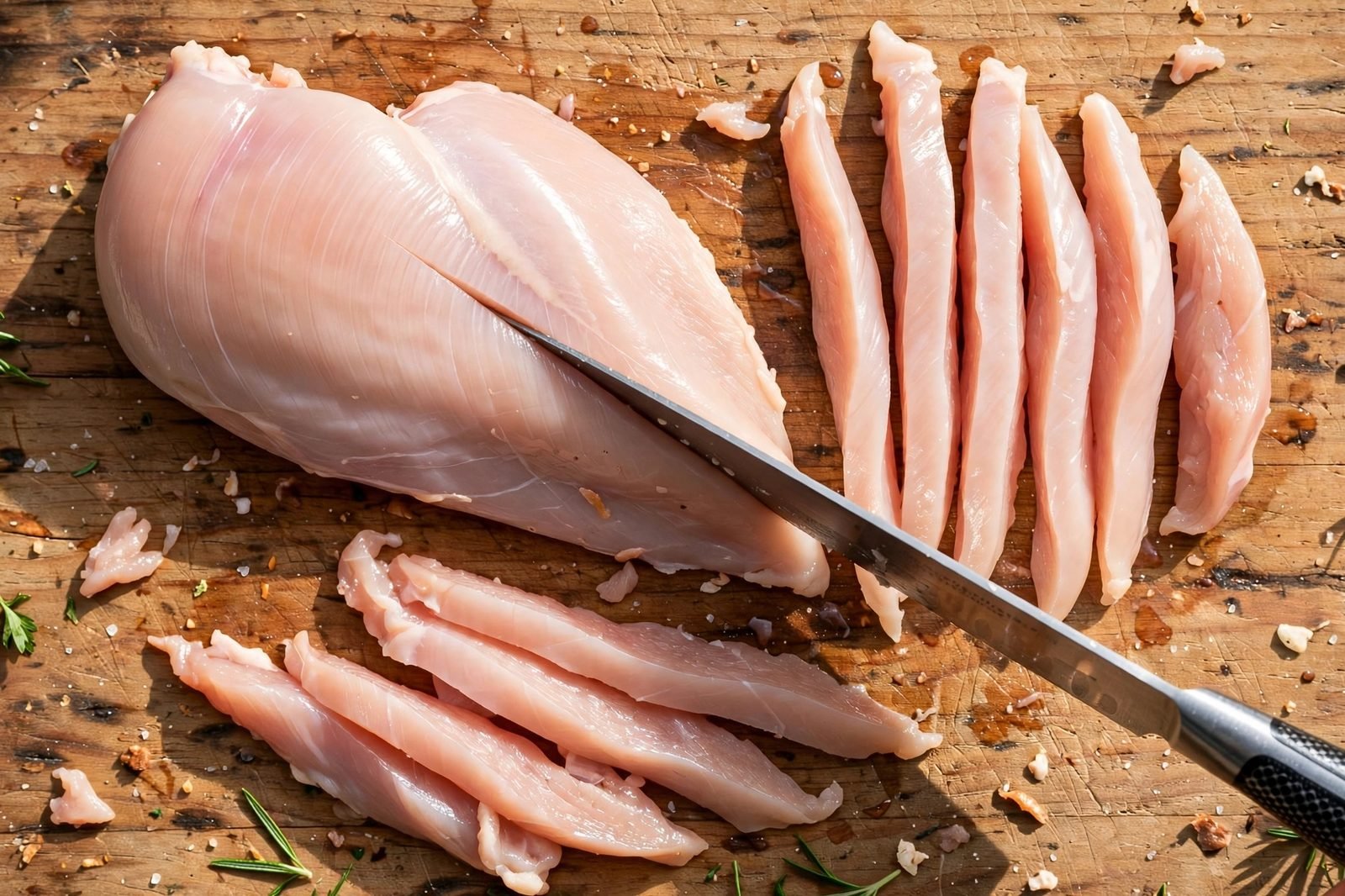
- 1 lb boneless, skinless chicken breasts, cut into thin strips
- 1 tbsp olive oil
- 1 tbsp butter
- 4 cloves garlic, minced and divided
- 1 1/2 cups cottage cheese, 2% or 4% — not fat-free
- 3/4 cup freshly grated Parmesan, plus more for serving
- 1/2 tsp Italian seasoning
- 1/2 tsp kosher salt, plus more for the pasta water
- 1/2 tsp black pepper, plus more for serving
- 1/4–1/2 cup reserved pasta water, or milk, as needed
- 1/4 cup chopped fresh parsley, for serving
- Red pepper flakes, for serving, optional
Equipment
A large pot for pasta, a large deep skillet (12-inch), a blender (or food processor), and tongs.
Instructions
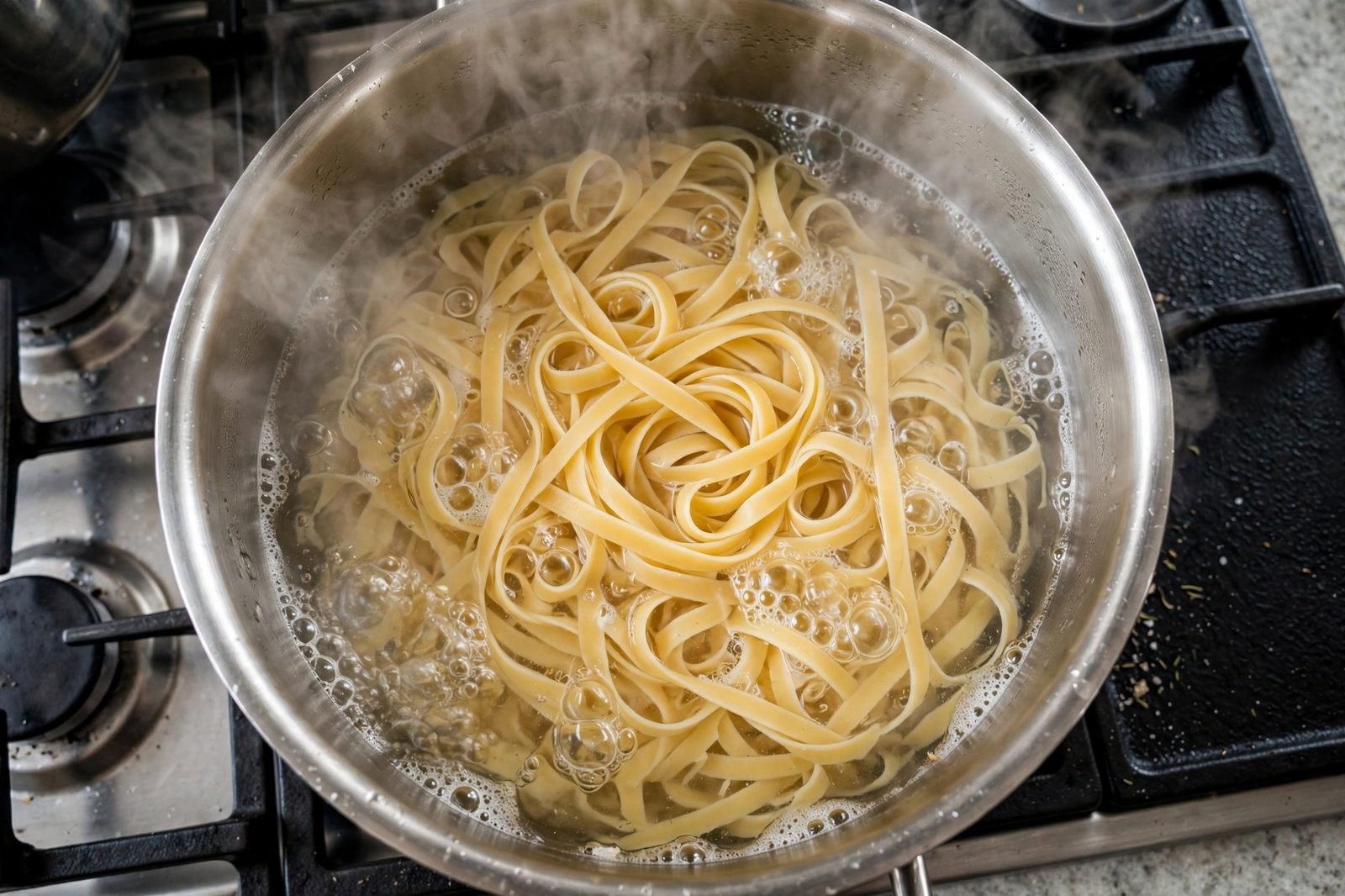
- Boil the pasta. Bring a large pot of generously salted water to a rolling boil. Cook the fettuccine until just al dente — about 1 minute shy of the package directions, since it finishes in the sauce. Before draining, scoop out 1 cup of the starchy pasta water; this is what makes the sauce cling. Drain.
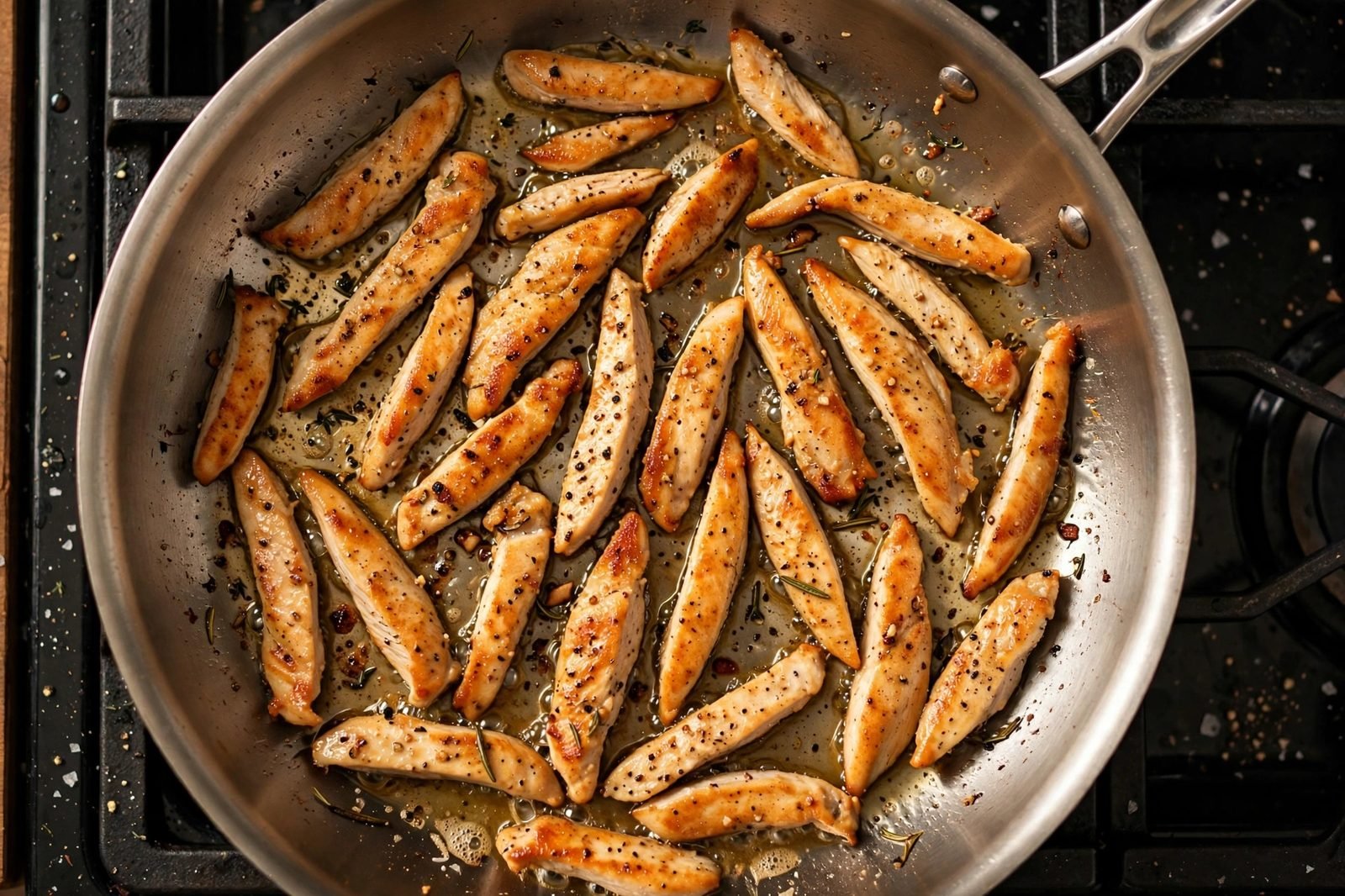
- Sear the chicken. While the pasta cooks, heat the olive oil in a large deep skillet over medium-high heat. Season the chicken strips with the salt, pepper, and Italian seasoning. Sear 3–4 minutes per side until deeply golden and cooked through to 165°F internal, with no pink in the center. Transfer to a plate.
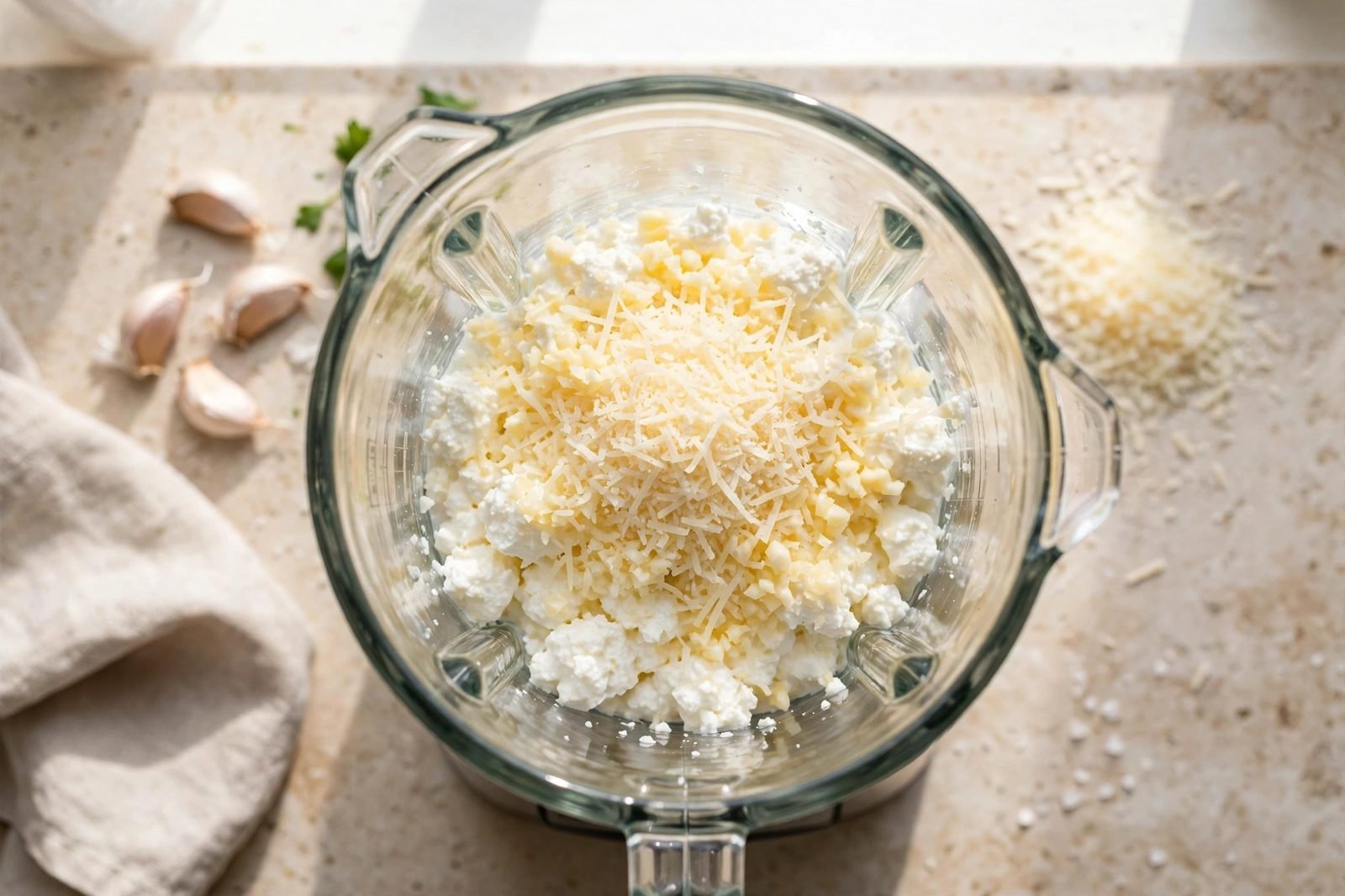
- Blend the alfredo sauce. Add the cottage cheese, Parmesan, and half the minced garlic to a blender. Blend a full 60–90 seconds until completely silky with zero visible curds — this step is the entire recipe, so don’t rush it. If the blender struggles, add 2–3 tablespoons of milk or pasta water to get it moving.
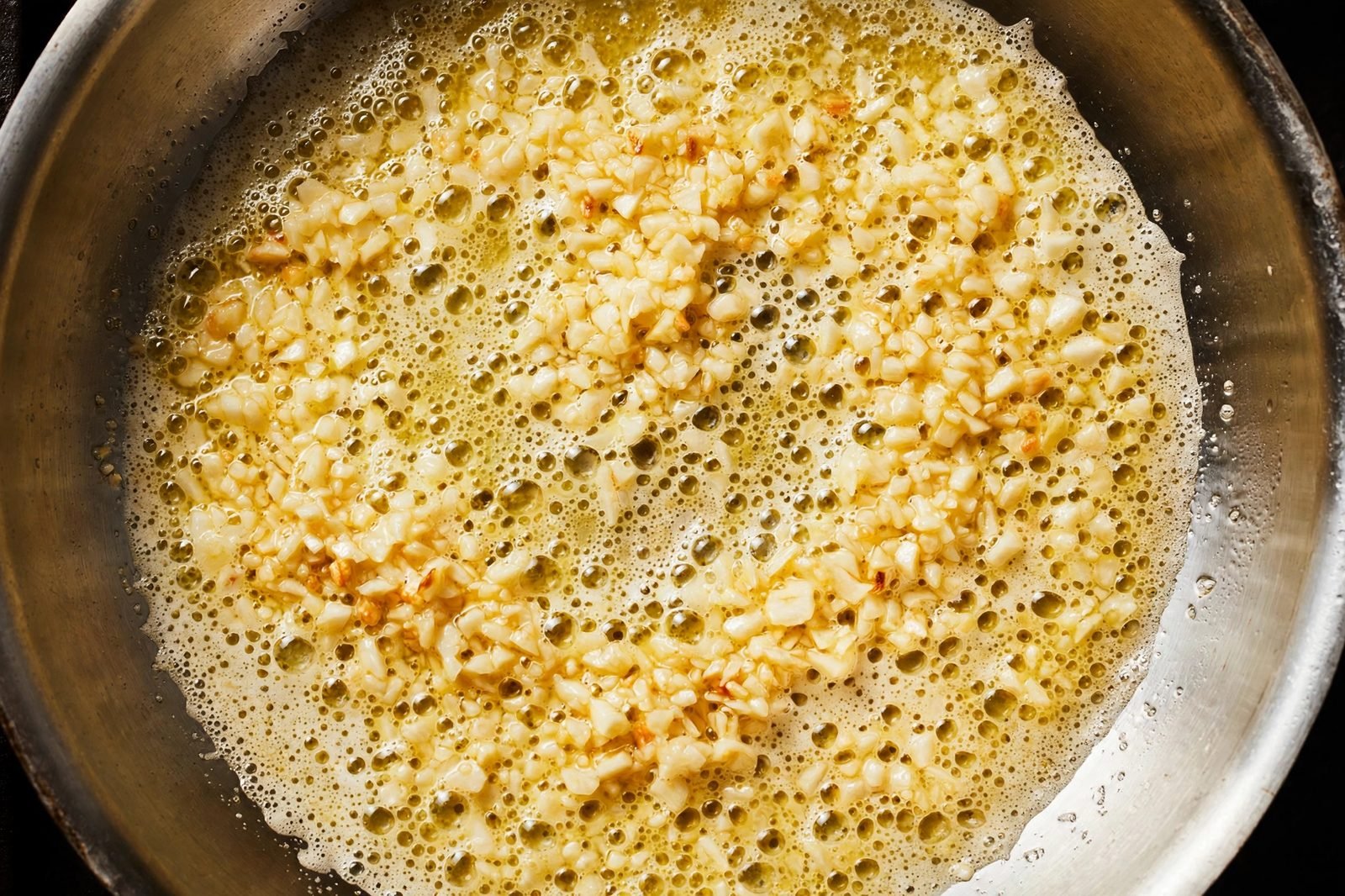
- Soften the garlic. Reduce the skillet to medium-low heat. Melt the butter, add the remaining garlic, and cook 30–60 seconds until fragrant but not browned — browned garlic turns bitter.
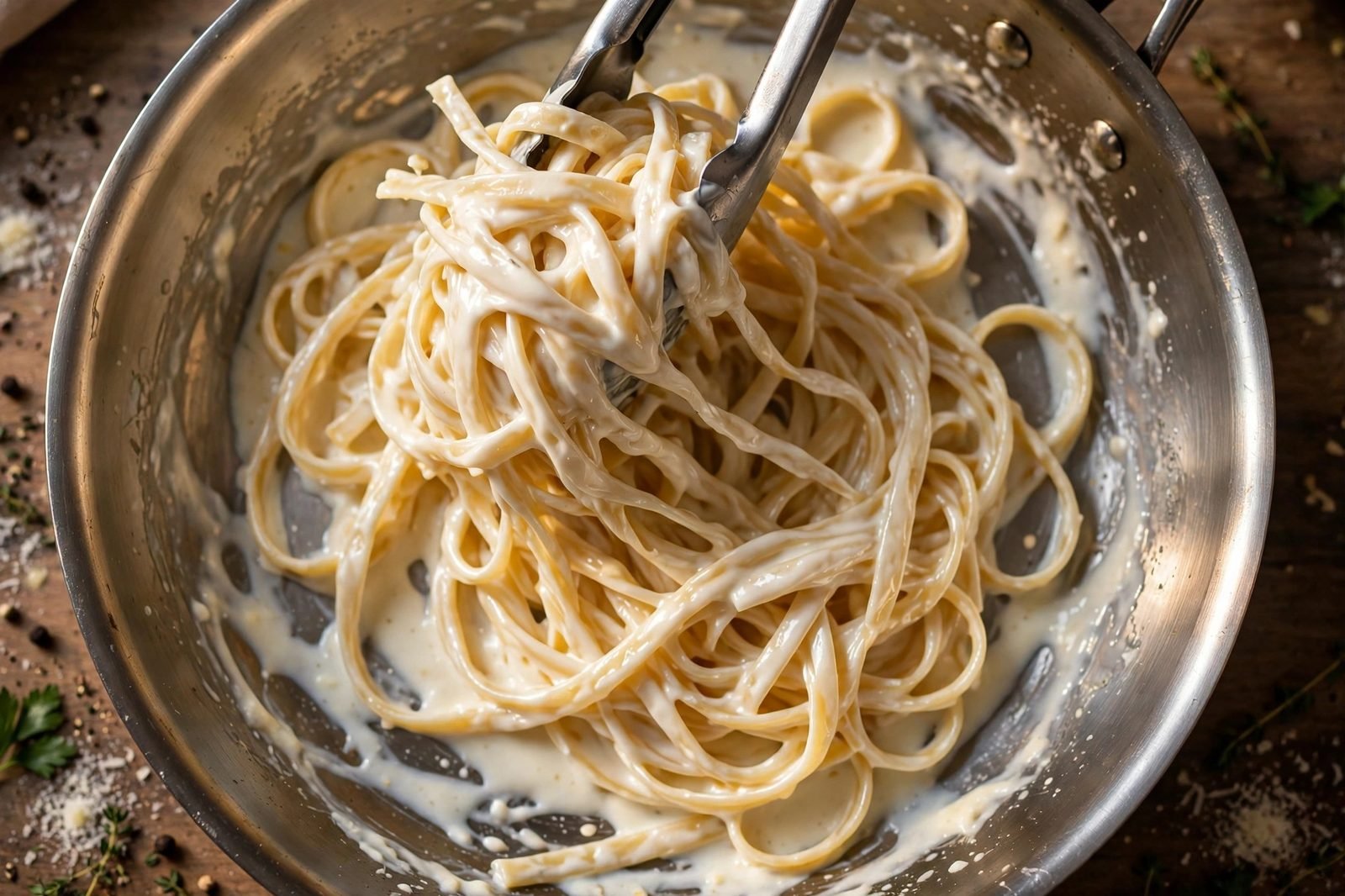
- Bring it all together. Pour the blended sauce into the skillet and warm it gently, stirring — never let it boil, or the dairy can separate. Add the drained pasta and the seared chicken, tossing with tongs to coat every strand. Splash in reserved pasta water a few tablespoons at a time until the sauce turns glossy and clings.
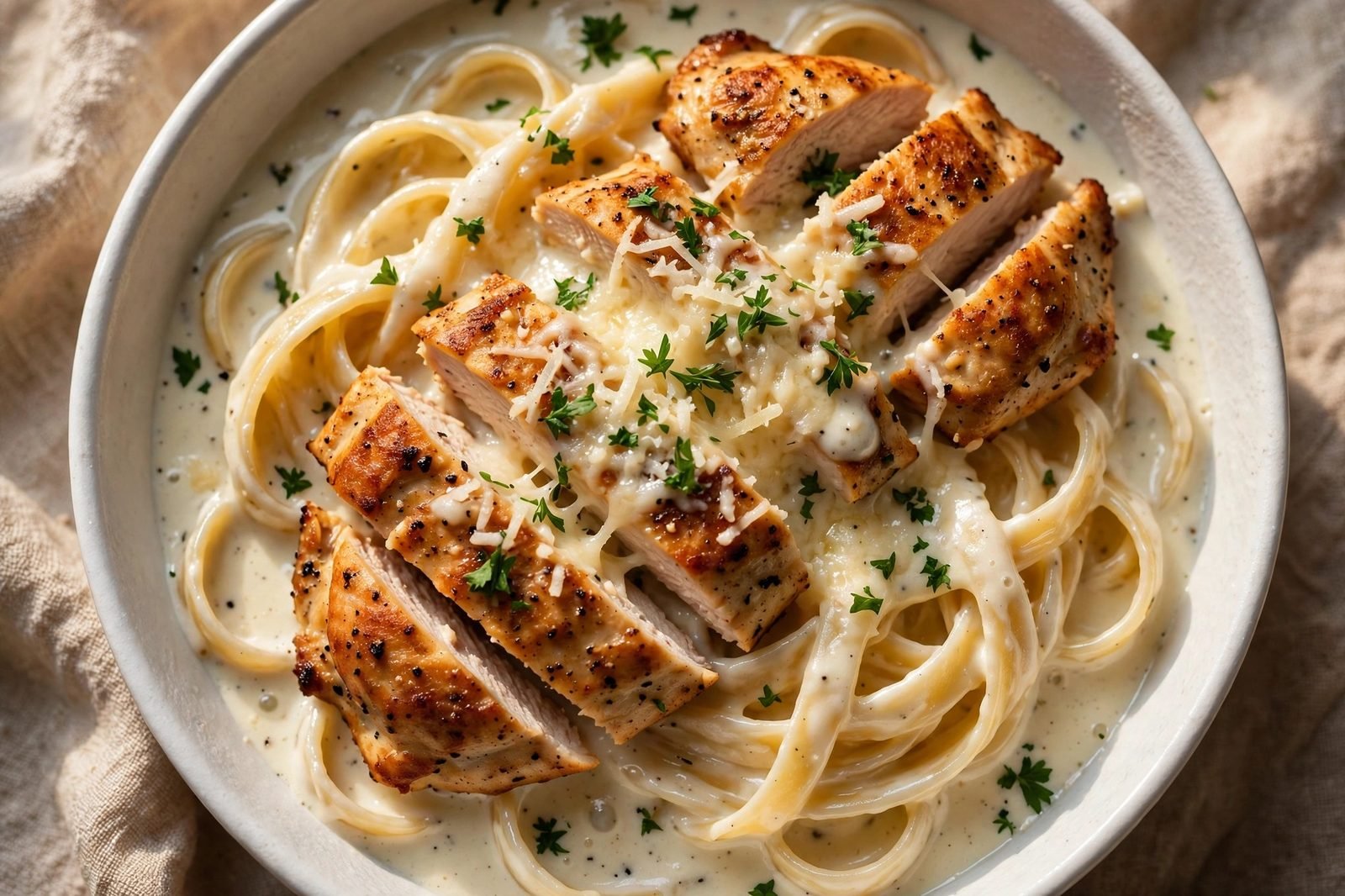
- Serve. Divide among warm bowls. Shower with extra Parmesan, chopped parsley, cracked black pepper, and red pepper flakes if you like heat.
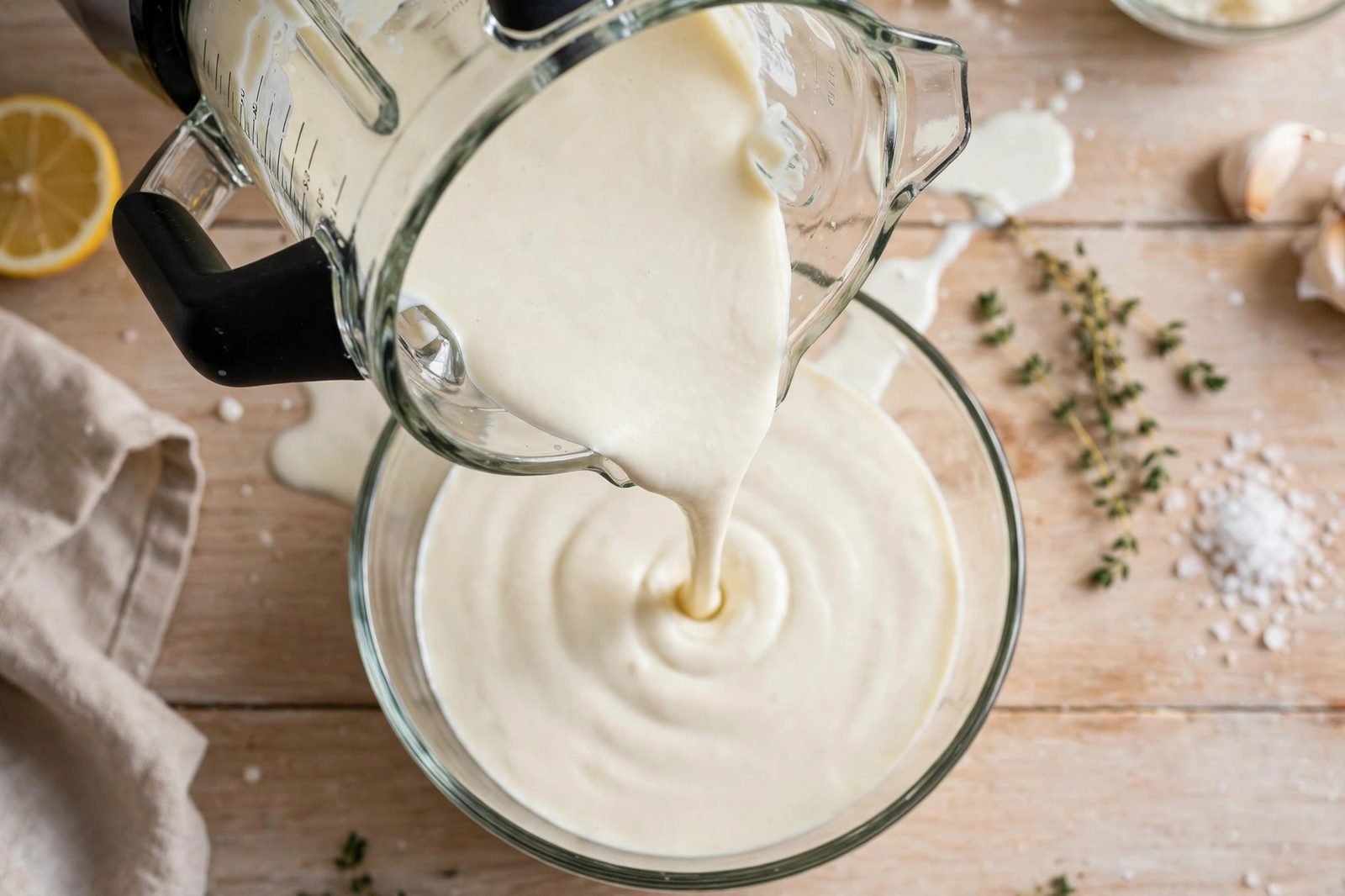
Doneness cues: Chicken must reach 165°F internally and show no pink in the thickest strip. The sauce is ready when it looks completely smooth in the blender — no curds, no graininess. The finished dish should look glossy, not soupy; the pasta keeps drinking sauce as it sits, so serve right away.
20-Minute Cottage Cheese Alfredo with Chicken
Ingredients
Equipment
Method
- Bring a large pot of generously salted water to a rolling boil. Cook the fettuccine until just al dente — about 1 minute shy of the package directions, since it finishes in the sauce. Before draining, scoop out 1 cup of the starchy pasta water; this is what makes the sauce cling. Drain.
- While the pasta cooks, heat the olive oil in a large deep skillet over medium-high heat. Season the chicken strips with the salt, pepper, and Italian seasoning. Sear 3–4 minutes per side until deeply golden and cooked through to 165°F internal, with no pink in the center. Transfer to a plate.
- Add the cottage cheese, Parmesan, and half the minced garlic to a blender. Blend a full 60–90 seconds until completely silky with zero visible curds — this step is the entire recipe, so don’t rush it. If the blender struggles, add 2–3 tablespoons of milk or pasta water to get it moving.
- Reduce the skillet to medium-low heat. Melt the butter, add the remaining garlic, and cook 30–60 seconds until fragrant but not browned — browned garlic turns bitter.
- Pour the blended sauce into the skillet and warm it gently, stirring — never let it boil, or the dairy can separate. Add the drained pasta and the seared chicken, tossing with tongs to coat every strand. Splash in reserved pasta water a few tablespoons at a time until the sauce turns glossy and clings.
- Divide among warm bowls. Shower with extra Parmesan, chopped parsley, cracked black pepper, and red pepper flakes if you like heat.
Notes
Nutrition note
Protein is estimated at about 50g per serving, calculated from USDA FoodData Central values for the listed ingredients — this is an estimate, not a lab analysis. Actual values vary by brand and preparation.
Substitutions and tips
- Penne or rigatoni instead of fettuccine: tubes trap the sauce beautifully and are easier to toss.
- Use 2% or 4% cottage cheese only. Fat-free cottage cheese lacks the fat that keeps the sauce silky and tends to turn grainy when warmed.
- Never boil the sauce. High heat is what makes dairy sauces separate. Warm it gently over medium-low and you’ll keep it velvety.
- Add-ins: a handful of baby spinach, frozen peas, sliced mushrooms, or sun-dried tomatoes all fold in nicely at step 5.
- Gluten-free: use your favorite GF fettuccine — and definitely save that pasta water, since GF starches help the sauce cling even better.
- No blender? A food processor works, or an immersion blender right in a deep measuring cup. It needs real blending power, though — mashing with a fork won’t get you there.
Storage and reheating
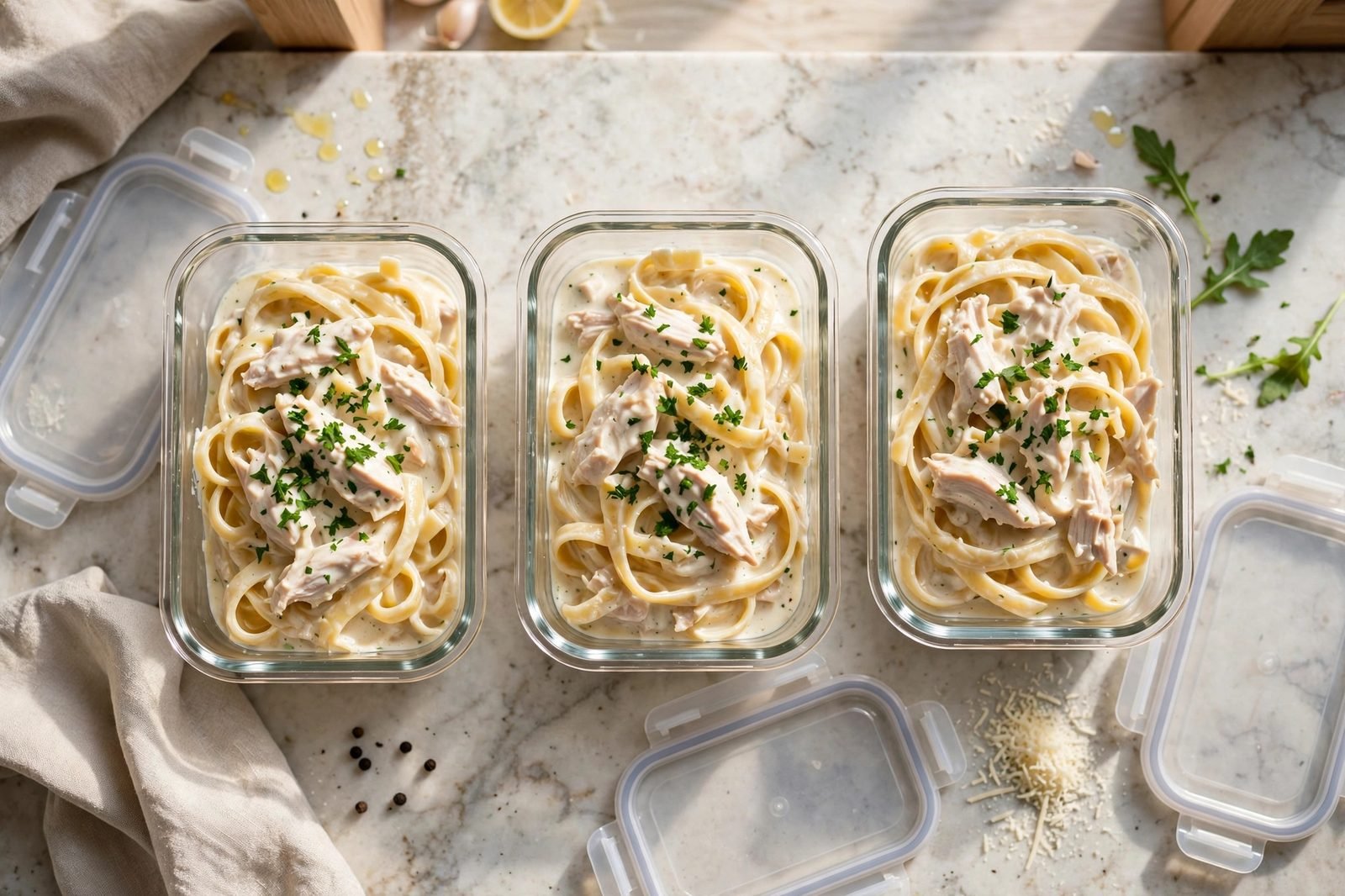
Refrigerate leftovers within 2 hours in an airtight container for up to 4 days. Reheat gently in a skillet over medium-low heat with a splash of milk or water, stirring, until steaming (165°F) — high heat will make the sauce grainy. Not recommended for freezing; dairy-based sauces tend to split when thawed.
Frequently asked questions
Will I actually taste the cottage cheese? No — that’s the whole point. Blended completely smooth with Parmesan and garlic, it reads as creamy and cheesy, not tangy or curdy. If you can detect cottage cheese, it needed more blending time.
Why is my sauce grainy? Two usual culprits: under-blending (give it the full 60–90 seconds) or too much heat (warm the sauce gently and never let it boil).
Can I use fat-free cottage cheese? It’s not recommended — without enough fat, the sauce turns grainy when warmed. Stick with 2% or 4%.
Can I make the sauce ahead? Yes. Blend it and refrigerate for up to 3 days, then warm gently and thin with a splash of milk or pasta water when you’re ready.
What pasta shape works best? Fettuccine is the classic alfredo pairing, but penne and rigatoni are excellent — their tubes catch the sauce.
More high-protein pasta dinners
For another creamy chicken pasta night, try our 30-Minute Creamy Tuscan Chicken Skillet. More high-protein pasta: 30-Minute Garlic Parmesan Chicken Pasta is a weeknight staple. Seafood instead? 20-Minute Shrimp Scampi with Chickpea Pasta keeps the protein high.