
Shrimp scampi is already one of the fastest dinners in the Italian-American canon — shrimp cook in minutes, and the sauce is just garlic, butter, and lemon. The only thing slowing it down is usually a pile of refined pasta. Swapping in chickpea rotini changes the math: the pasta itself brings serious protein, so the whole plate lands around 30g per serving (estimated) without a single supplement-powder trick. Twenty minutes, one pot plus one skillet, and it tastes like the restaurant version.
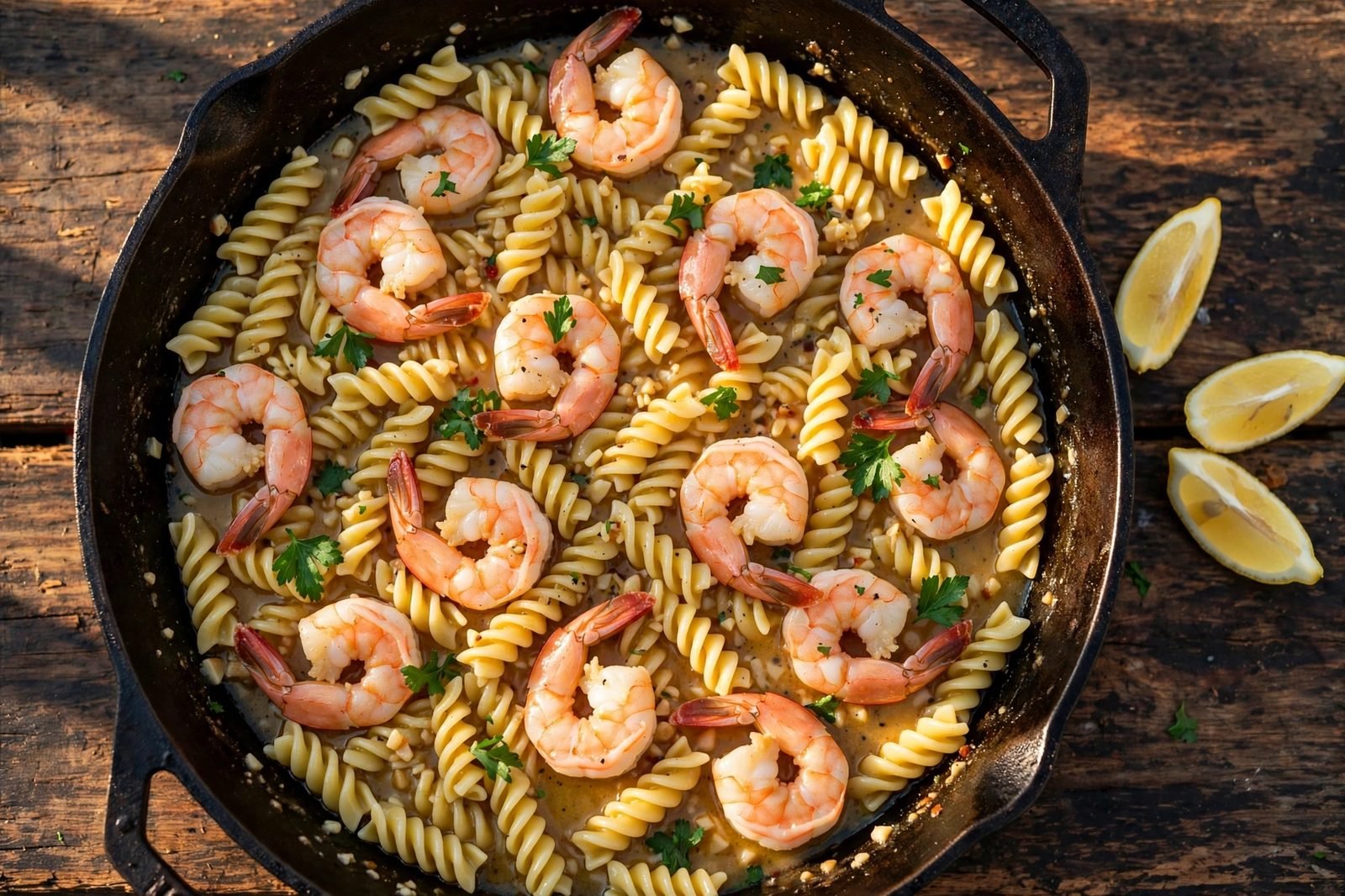
Why you’ll love it
- Genuinely 20 minutes. Shrimp cook in about 4 minutes; the sauce comes together while the pasta boils.
- ~30g protein per serving (estimated) — plump shrimp plus protein-rich chickpea pasta.
- One pot + one skillet. The pasta boils while the scampi sauce builds; they meet at the end.
- Restaurant flavor, pantry staples. Garlic, butter, lemon, red pepper flakes — nothing fancy.
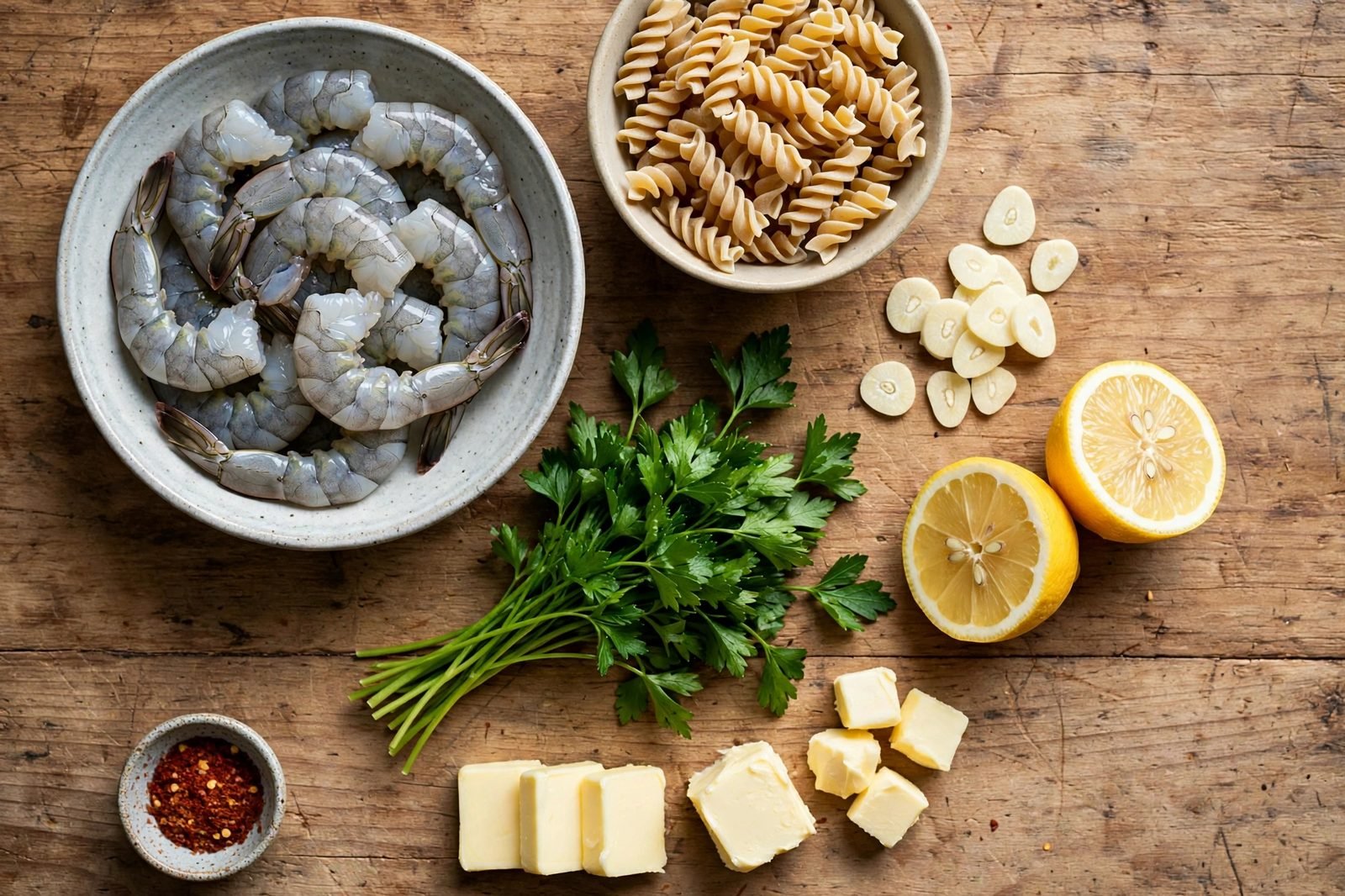
Ingredients
- 8 oz chickpea rotini or penne
- 1 tbsp kosher salt, for the pasta water
- 1.5 lb large shrimp, peeled and deveined, tails on or off
- 0.5 tsp kosher salt, plus more to taste
- 0.25 tsp black pepper
- 3 tbsp olive oil, divided
- 4 tbsp unsalted butter, divided
- 5 cloves garlic, thinly sliced
- 0.5 tsp red pepper flakes, plus more for serving
- 0.5 cup dry white wine or low-sodium chicken broth
- 1 large lemon, zested and juiced, plus wedges for serving
- 0.33 cup chopped fresh parsley, plus more for serving
- 0.33 cup freshly grated Parmesan, plus more for serving
Equipment
A large pot for the pasta and a large skillet (12-inch).
Instructions
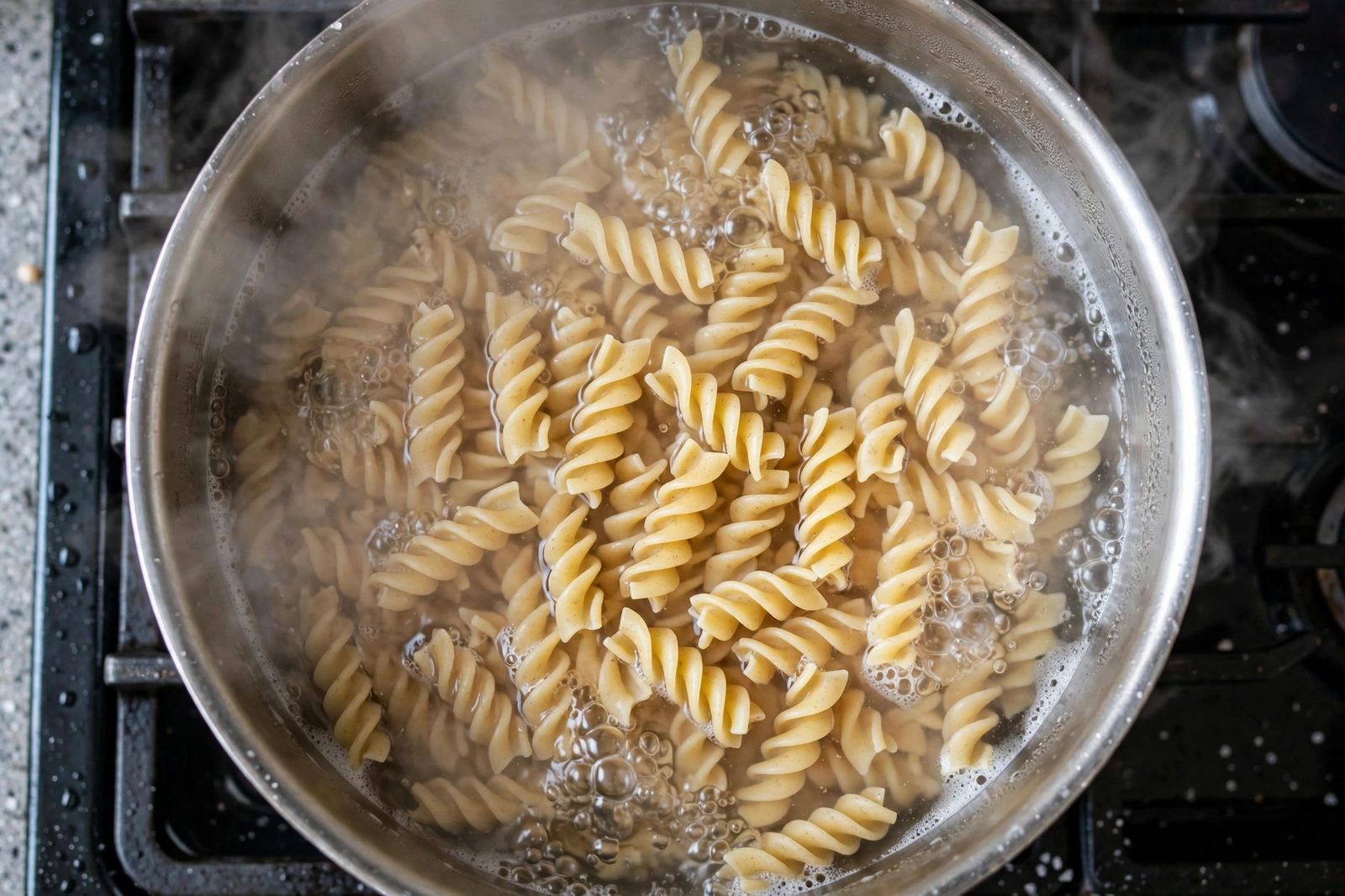
- Boil the pasta. Bring a large pot of water to a rolling boil; salt it well. Cook the chickpea rotini according to package directions until just al dente, usually 7–9 minutes. Reserve 1 cup of the starchy pasta water, then drain. (Chickpea pasta foams more than wheat pasta — use a big pot and don’t walk away.)
- Season the shrimp. While the pasta cooks, pat the shrimp very dry with paper towels and season with the salt and pepper. Dry shrimp sear instead of steam.
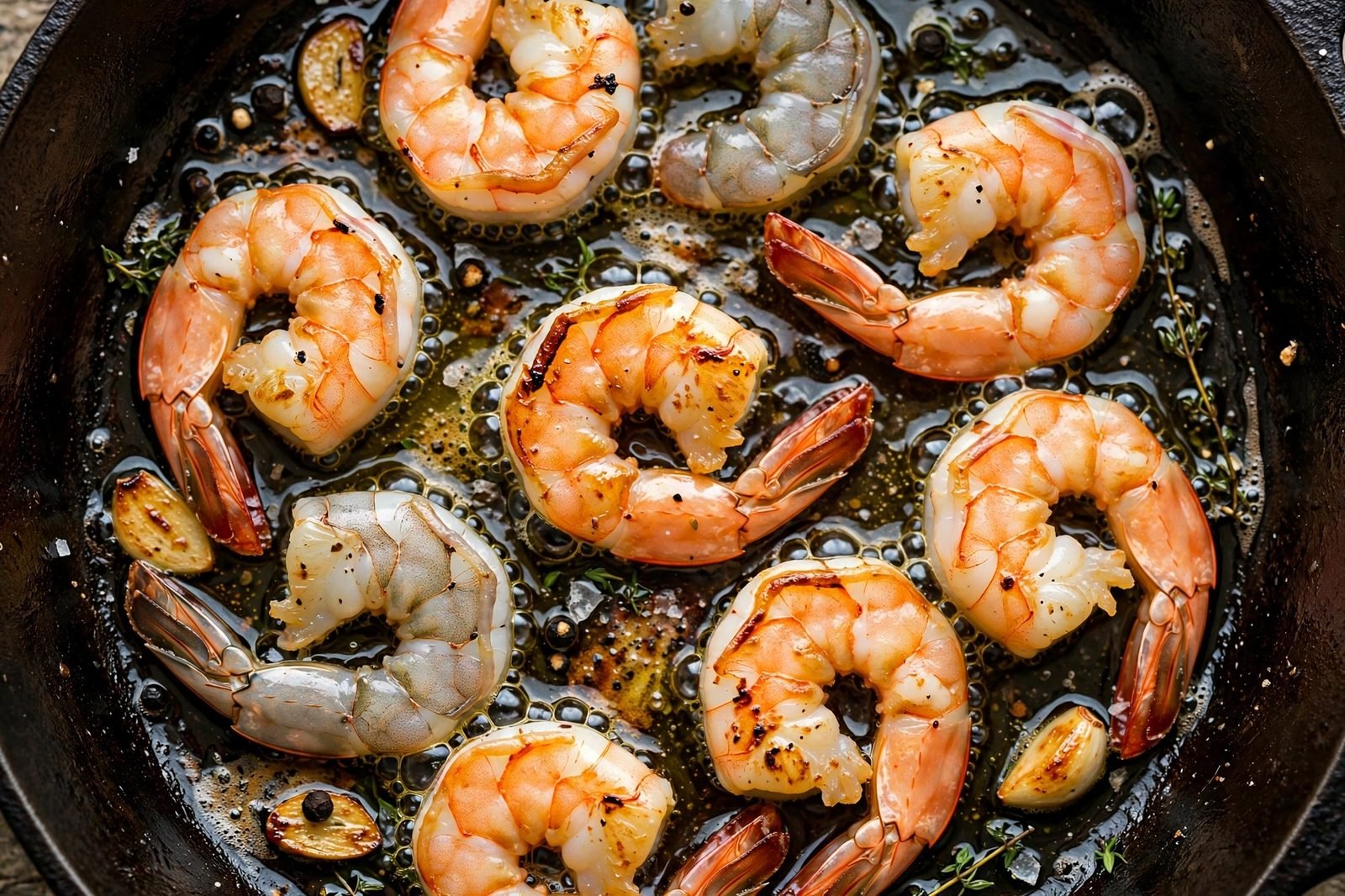
- Sear the shrimp. Heat 2 tablespoons of the olive oil in a large skillet over medium-high heat until shimmering. Add the shrimp in a single layer and cook about 2 minutes per side, until pink, opaque, and just curled into a C shape. Transfer to a plate — they finish in the sauce.
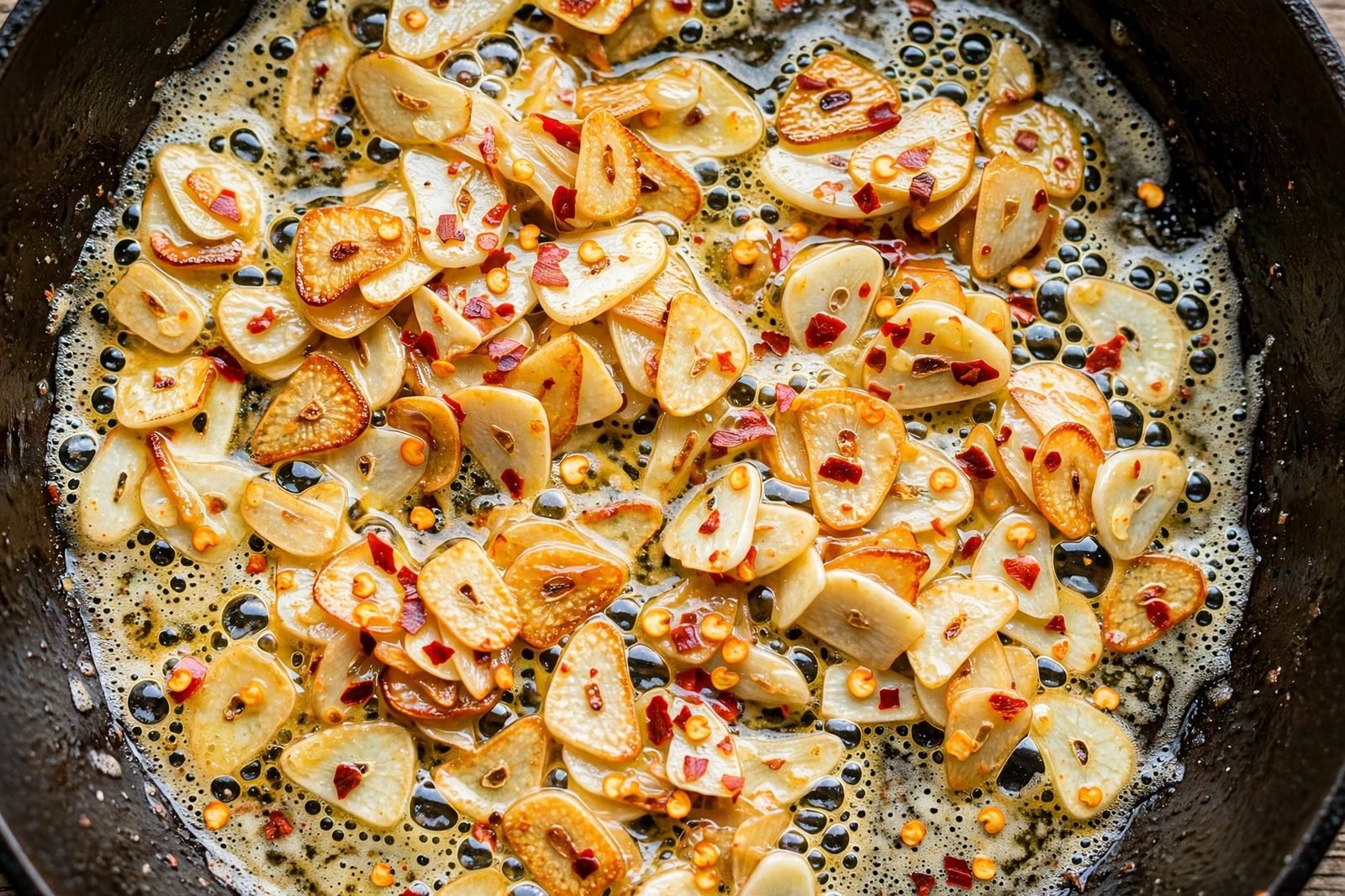
- Build the garlic butter sauce. Reduce the heat to medium. Add the remaining 1 tablespoon olive oil and 2 tablespoons of the butter to the skillet. Stir in the sliced garlic and red pepper flakes; cook 60–90 seconds, until the garlic is golden at the edges but not brown.
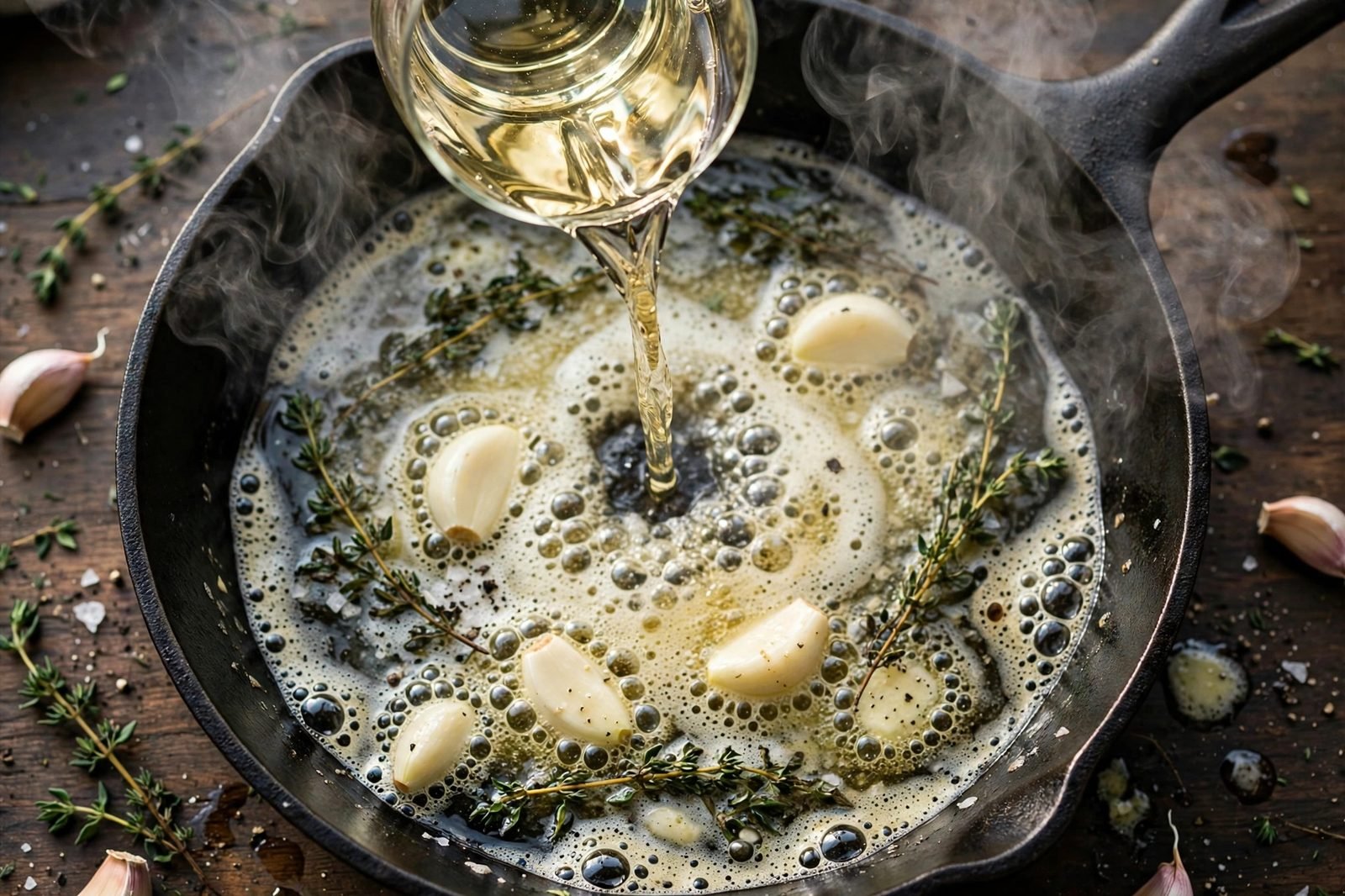
- Deglaze. Pour in the white wine (or broth), scraping up the browned bits. Simmer 1–2 minutes, until reduced by about half and no longer harsh.
- Bring it together. Add the drained pasta to the skillet along with 1/2 cup of the reserved pasta water, the lemon zest and juice, and the remaining 2 tablespoons butter. Toss vigorously until the butter melts into a glossy sauce that clings to the rotini, adding splashes of pasta water as needed. Return the shrimp and any juices to the pan; toss 30 seconds to warm through. Shower with parsley and Parmesan and serve immediately with lemon wedges.
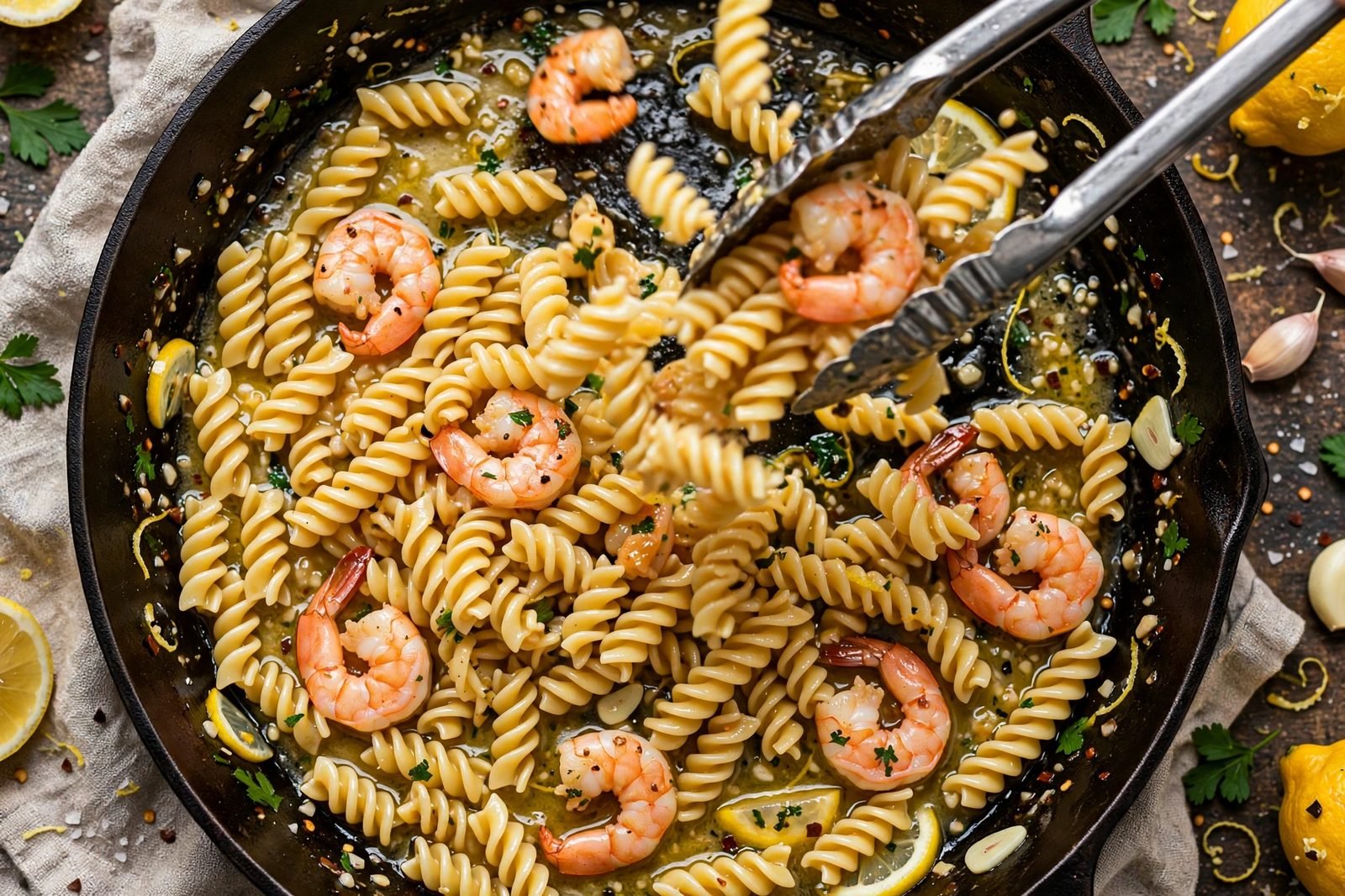
Doneness cues: Shrimp are done when pink and opaque all the way through with no gray translucency left, curled into a loose C (tight O’s mean overcooked). They should reach 145°F internally. The sauce is right when it looks glossy and coats the pasta rather than pooling — the starchy chickpea pasta water is what makes it cling.
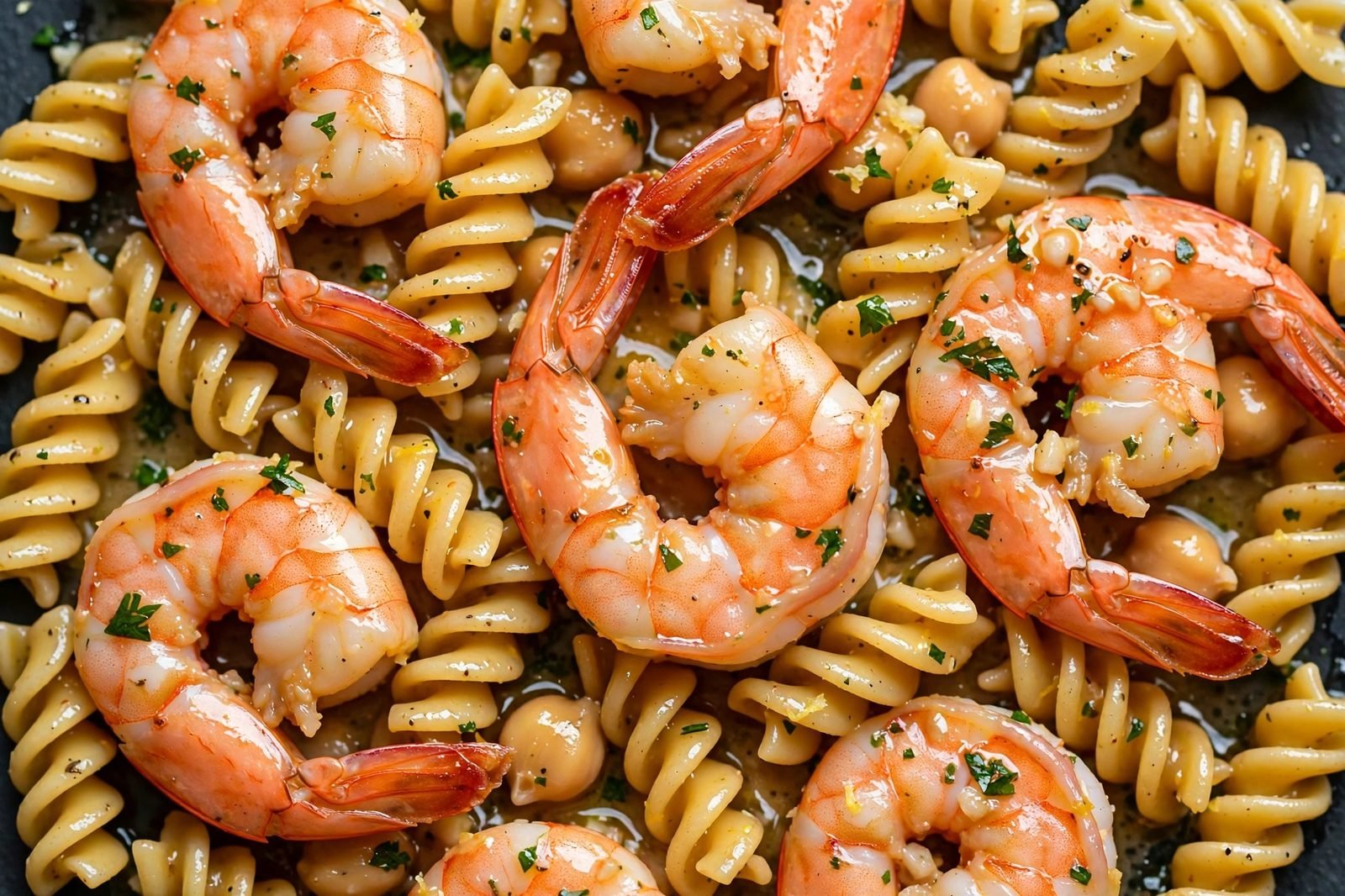
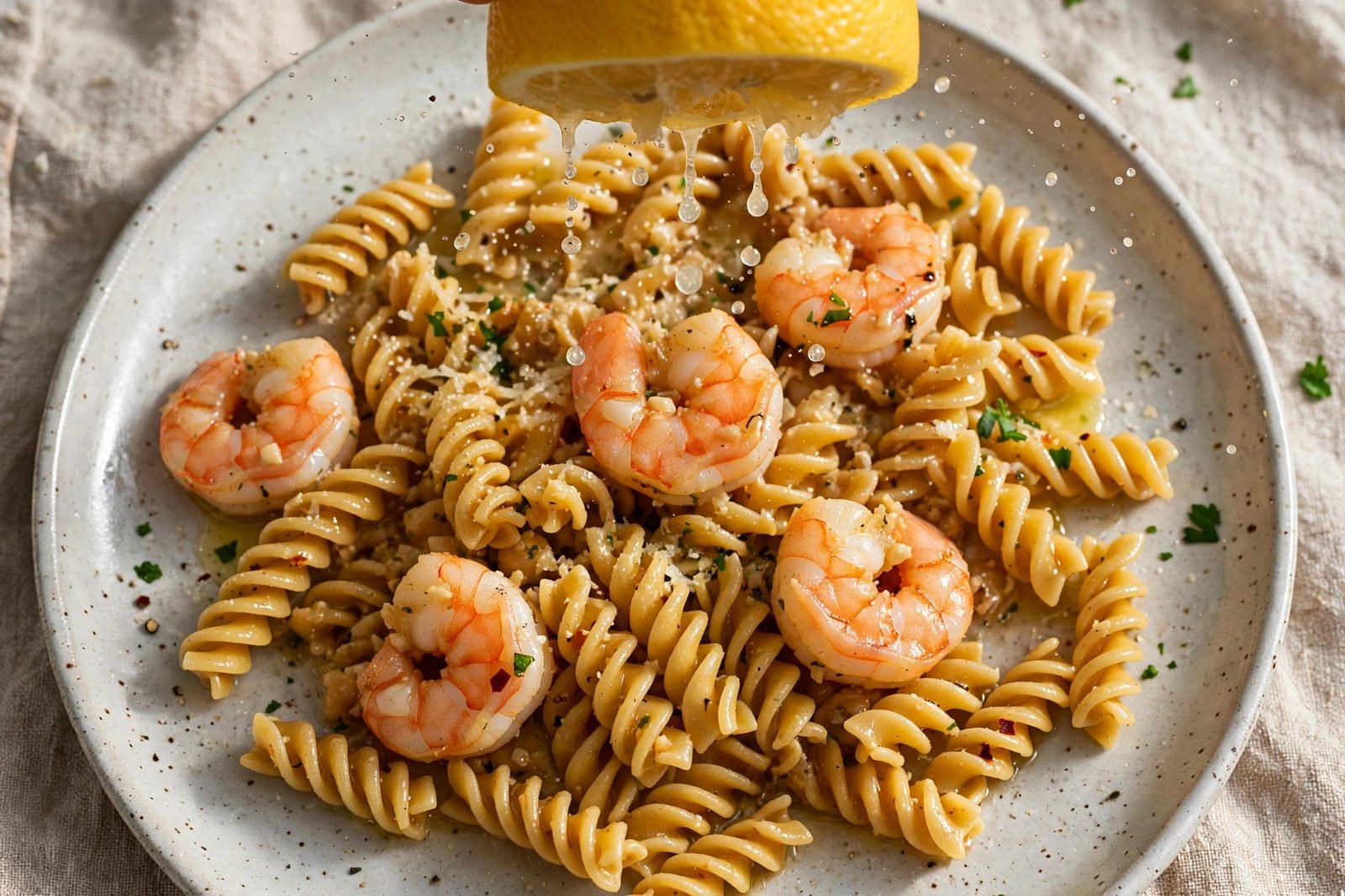
20-Minute Shrimp Scampi with Chickpea Pasta
Ingredients
Equipment
Method
- Bring a large pot of water to a rolling boil; salt it well. Cook the chickpea rotini according to package directions until just al dente, usually 7–9 minutes. Reserve 1 cup of the starchy pasta water, then drain. (Chickpea pasta foams more than wheat pasta — use a big pot and don’t walk away.)
- While the pasta cooks, pat the shrimp very dry with paper towels and season with the salt and pepper. Dry shrimp sear instead of steam.
- Heat 2 tablespoons of the olive oil in a large skillet over medium-high heat until shimmering. Add the shrimp in a single layer and cook about 2 minutes per side, until pink, opaque, and just curled into a C shape. Transfer to a plate — they finish in the sauce.
- Reduce the heat to medium. Add the remaining 1 tablespoon olive oil and 2 tablespoons of the butter to the skillet. Stir in the sliced garlic and red pepper flakes; cook 60–90 seconds, until the garlic is golden at the edges but not brown.
- Pour in the white wine (or broth), scraping up the browned bits. Simmer 1–2 minutes, until reduced by about half and no longer harsh.
- Add the drained pasta to the skillet along with 1/2 cup of the reserved pasta water, the lemon zest and juice, and the remaining 2 tablespoons butter. Toss vigorously until the butter melts into a glossy sauce that clings to the rotini, adding splashes of pasta water as needed. Return the shrimp and any juices to the pan; toss 30 seconds to warm through. Shower with parsley and Parmesan and serve immediately with lemon wedges.
Notes
Nutrition note
Protein is estimated at about 30g per serving, calculated from USDA FoodData Central values for the listed ingredients — this is an estimate, not a lab analysis. Actual values vary by brand and preparation.
Substitutions and tips
- No wine? Use low-sodium chicken broth with an extra squeeze of lemon — the acidity matters more than the alcohol.
- Frozen shrimp: thaw overnight in the fridge, or in a colander under cold running water for 10–15 minutes, then pat very dry.
- Don’t crowd the pan in step 3 — sear in two batches if needed. Steamed shrimp never get that golden edge.
- Watch the garlic. Sliced garlic goes from golden to bitter in under a minute; keep it moving and pull the pan off heat if needed.
- Gluten-free note: chickpea pasta already is — just confirm your broth and Parmesan labels if cooking for celiac.
- Make it dairy-free: swap the butter for more olive oil and skip the Parmesan; the lemon-garlic base still shines.
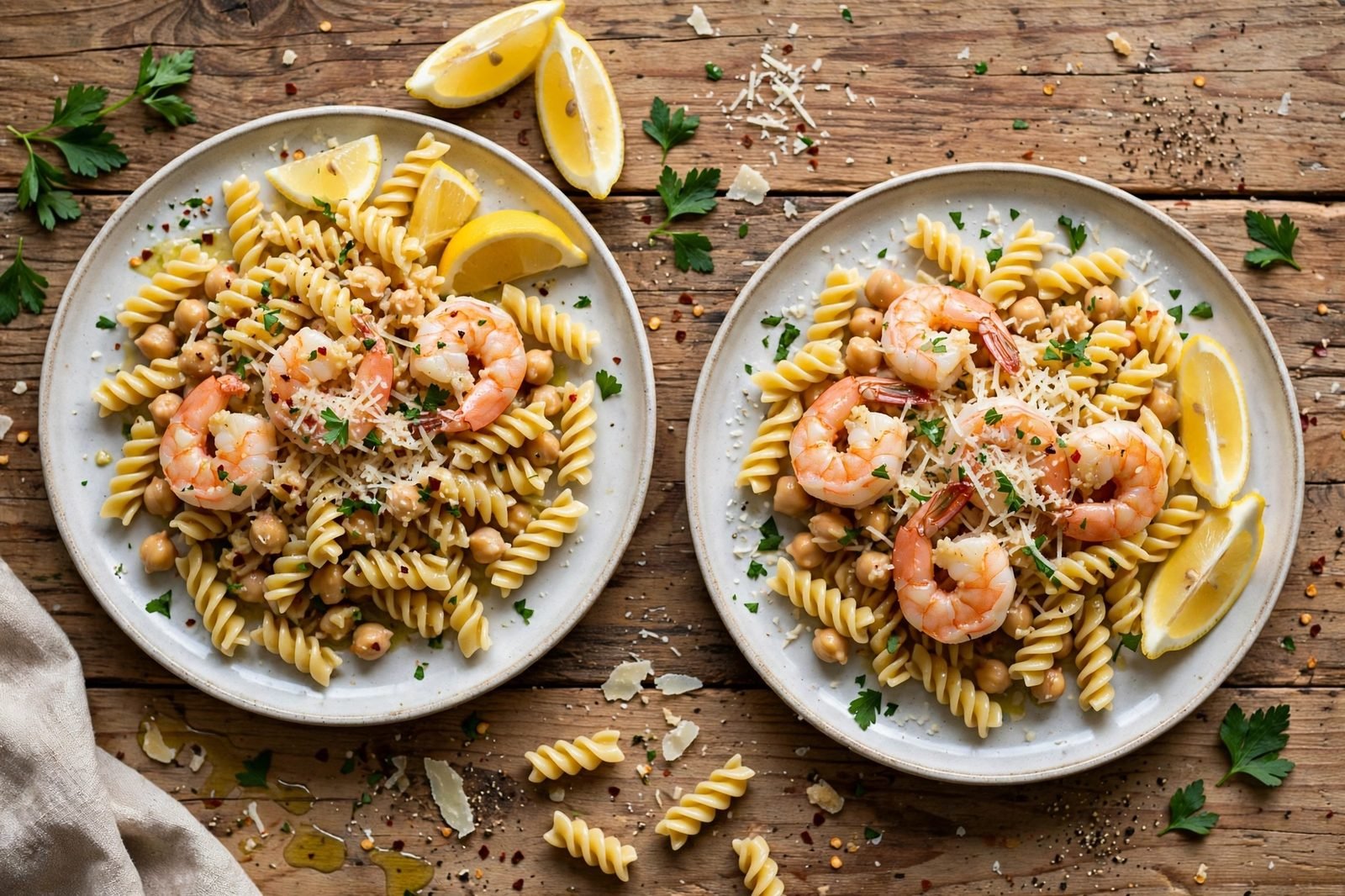
Storage and reheating
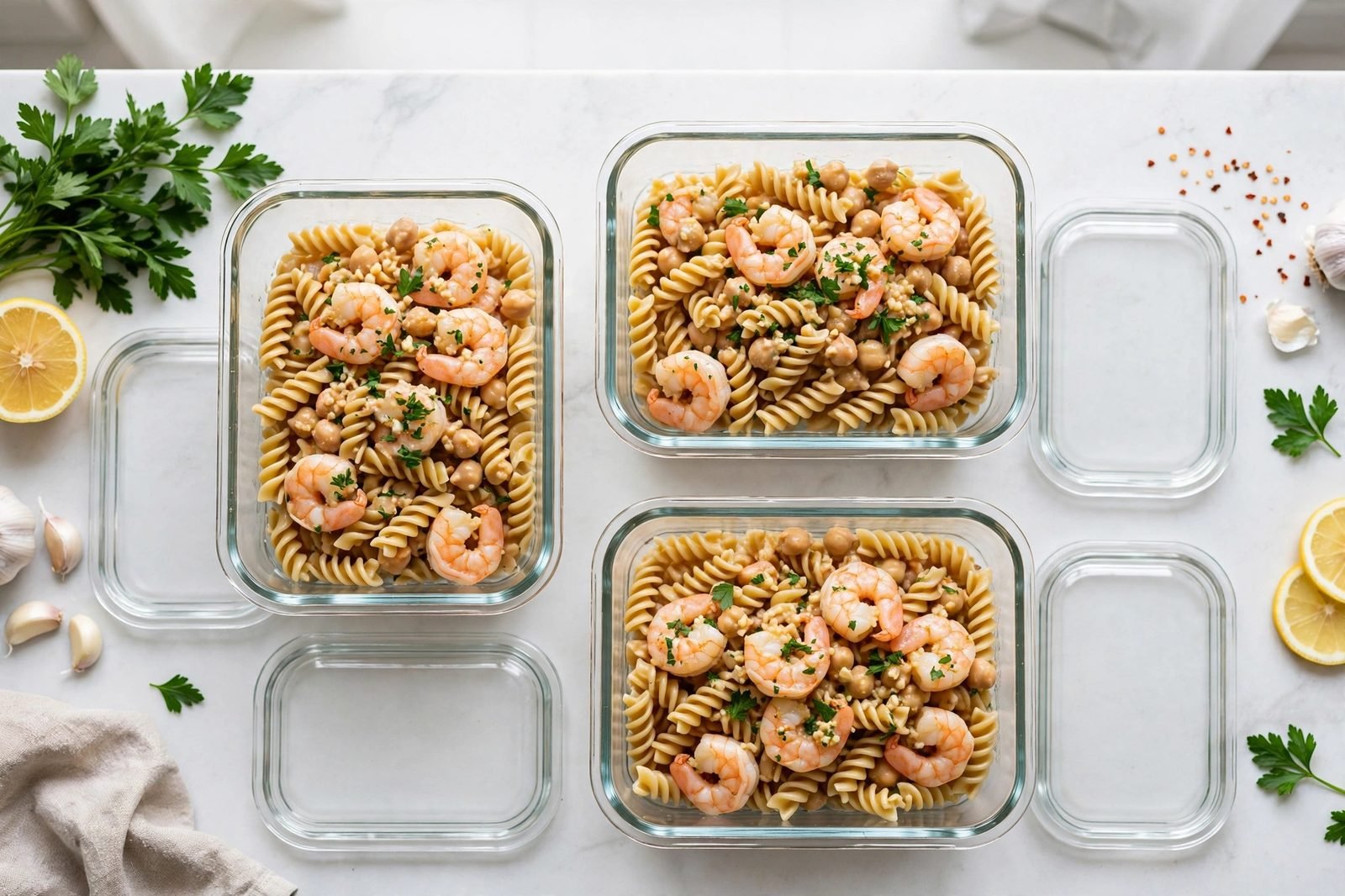
Refrigerate leftovers within 2 hours in an airtight container for up to 2 days (seafood keeps shorter than meat). Reheat gently in a skillet over medium-low heat with a splash of water or broth until just steaming — microwaving turns shrimp rubbery. Freezing is not recommended; the shrimp texture suffers.
Frequently asked questions
Can I use regular wheat pasta? Yes — 8 oz of any short shape works 1:1 and cooks a minute or two faster. You’ll lose the protein boost, landing closer to 24g per serving (estimated).
Why did my chickpea pasta get mushy? It was likely overcooked or left sitting in hot water. Pull it a full minute before the package time and rinse briefly if your brand recommends it.
Can I use pre-cooked shrimp? You can, but add them at the very end of step 6 just to warm through — even 60 seconds too long makes them rubbery.
Is this spicy? Mild warmth as written. Double the red pepper flakes for real heat, or omit for kids.
What wine works best? Any dry white you’d drink — Pinot Grigio or Sauvignon Blanc. Avoid “cooking wine,” which is salted.
Can I double it? Yes, but sear the shrimp in batches and use your largest skillet (or two) so nothing steams.
More quick high-protein dinners
Another 20-minute seafood win: our 30-Minute Teriyaki Salmon Bowls are all bowls, no fuss. For a chicken night instead, 25-Minute Honey Garlic Chicken & Green Beans is one pan. More one-pot comfort: 30-Minute Garlic Parmesan Chicken Pasta.